

Which thermal underwear is best for the military?
Layering is essential for modern military gear. Air pockets between the various layers of equipment provide optimal thermoregulation and protection against the elements. It is important to know which thermal underwear is best for military personnel, as the right choice is crucial not only for comfort but also for the soldier's health.
What Is Thermal Underwear and How Does It Work?
It is a special functional clothing layer that comes into direct contact with the skin. It retains the heat generated by the body. The primary purpose of thermal underwear is to protect a person from hypothermia in conditions where intense physical activity alternates with periods of inactivity.
Regular cotton underwear is not suitable because it absorbs sweat and becomes wet. As soon as a person stops moving, damp clothing cools down quickly. Thermal underwear made of synthetic materials or merino wool does not absorb sweat but wicks it away to the outer clothing layers. This keeps the skin dry, while the thin layer of warm air between the body and the underwear provides an additional “thermos” effect.
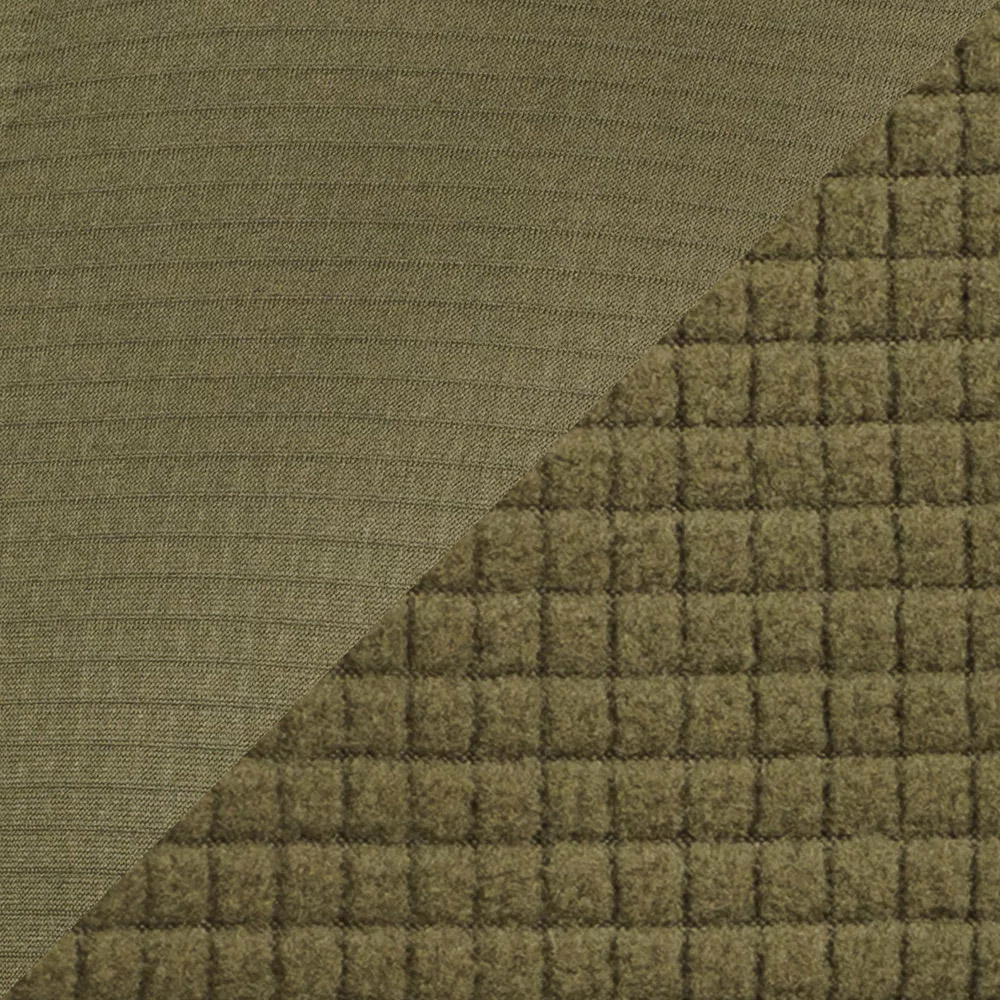
Thermal underwear works on several functional levels. The first, base layer sits directly against the body. It does not provide insulation but wicks away moisture. The second layer consists of fleece or grid fleece. This is the primary insulating thermal layer for winter. The third layer is a heavyweight fleece suit designed for guard duty in freezing temperatures.
Men's and women's thermal underwear differ in cut and sizing. Therefore, it is important to choose a model designed for the appropriate gender.
Thermal underwear should be selected according to the temperature range as follows:
- +10…-5 °C – Level 1 worn under the uniform.
- 0…-15 °C – Level 1 + Level 2.
- -10...–25 °C – Level 1 plus a fleece suit.
For a rotation, it is advisable to take two base-layer sets and one fleece set.
What Should Military Thermal Underwear Be Like?
Models designed for military personnel differ in their characteristics from those made for civilians.
High-quality military thermal underwear should feature:
- An anatomical fit. It ensures close contact with the skin and, consequently, effective moisture wicking.
- Flat seams. These are important for preventing chafing when wearing heavy body armor, a load-bearing system, a plate carrier, and a backpack over the base layer.
- Silver-ion treatment or antibacterial fibers in the fabric. These features help maintain hygiene when the same set needs to be worn for several consecutive days.
- Flame-resistant treatment or Meta-Aramid fibers. These prevent the material from melting against the body when exposed to high temperatures.
What Materials Are Used to Make Military Thermal Underwear?
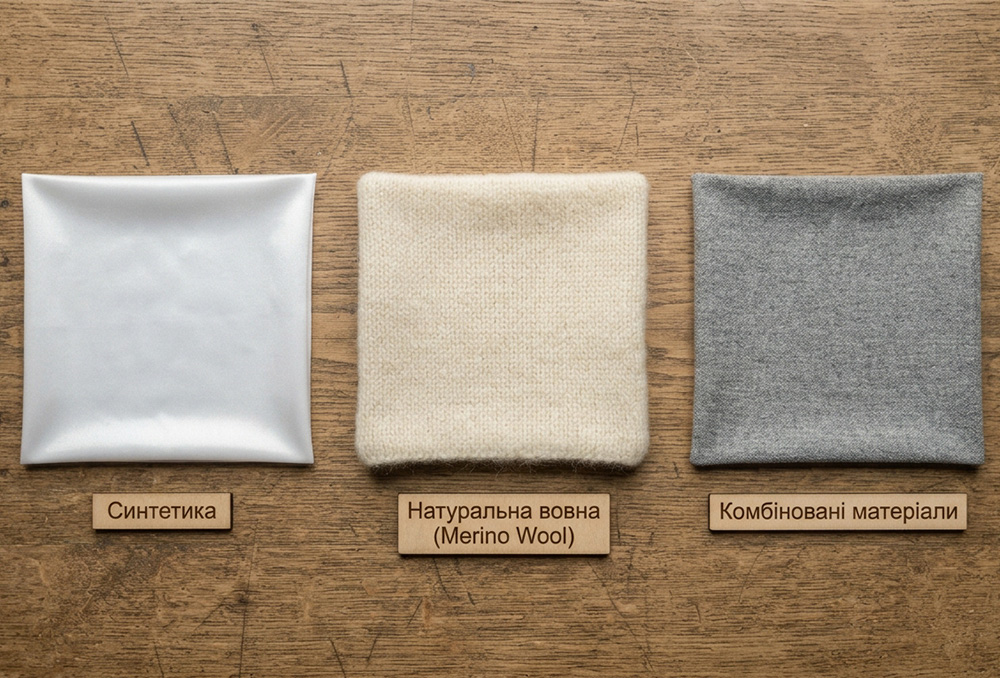
These garments are made primarily from synthetic fibers, natural wool, and blended materials. Each of these fabrics has its own advantages and limitations.
- Synthetic materials.
- Natural wool (Merino Wool).
- Blended materials (fabric blends).
Synthetic fabrics include polyester, polyamide, polypropylene, and elastane. The fibers of these materials do not absorb moisture and dry in just a few minutes. The addition of elastane provides stretch.
Natural merino sheep's wool is exceptionally soft and non-itchy. It continues to provide warmth even when completely wet.
Blended materials can consist of several layers. For example, an inner synthetic layer that quickly wicks away sweat and an outer wool layer that effectively retains heat.
Which thermal underwear provides the most warmth? Natural merino wool base layers and high-density two-layer models (from 200–250 g/m²) provide the best insulation.
Which thermal underwear is best for combat missions? For high levels of physical activity, a garment made from a blended material is the best choice. Buying military thermal underwear of this type is a good option because it quickly wicks away moisture and keeps the wearer warm during stops.
Which Thermal Underwear Is Better – Synthetic or Merino Wool?
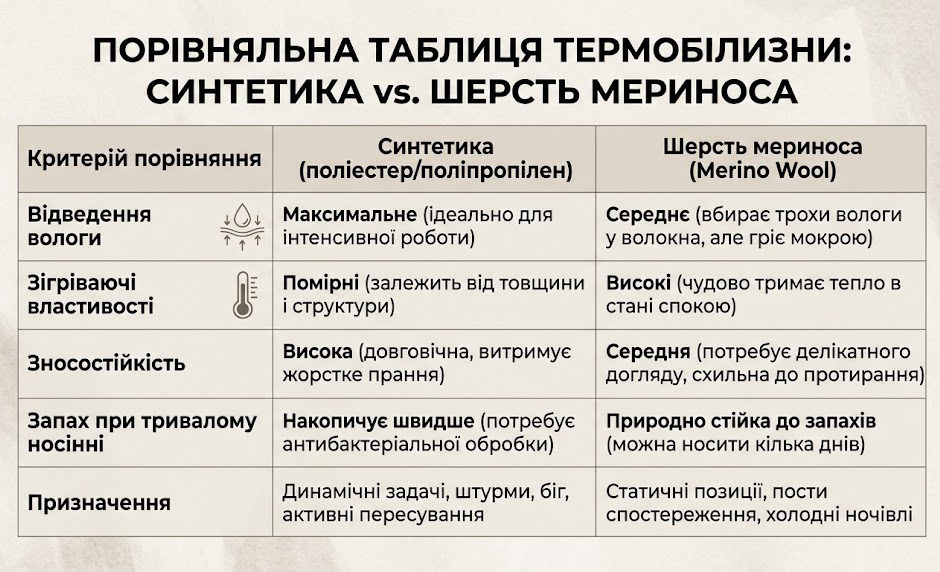
For most military tasks, high-quality synthetic thermal underwear is the better choice. It is practical and offers good wear resistance. Merino wool is more often chosen for situations involving limited movement or as a second layer in severe cold.
What Thermal Underwear Should Military Personnel Avoid?
In field conditions and during combat missions, the thermal regulation, hygiene, and fire safety of equipment directly affect a service member's combat effectiveness and life. An improperly selected base layer increases the risk of severe injuries in the event of thermal exposure and can also lead to rapid hypothermic or hyperthermic exhaustion of the body.
Underwear made from 100% cotton or low-cost acrylic, which quickly builds up static electricity and chafes the skin, is not recommended for military use.
Brightly colored civilian sports models should also be avoided for military use. Neon inserts, white, or bright blue shades can make a soldier visible through night vision devices or through openings in their clothing.
How do you choose thermal underwear for military use? Pay attention to the size. Models that are too loose will not work effectively because they will not maintain contact with the skin. Thermal underwear that is too tight will put excessive pressure on the body. This can impair blood circulation and cause the wearer to get cold.
What Thermal Underwear Is Suitable for Winter?
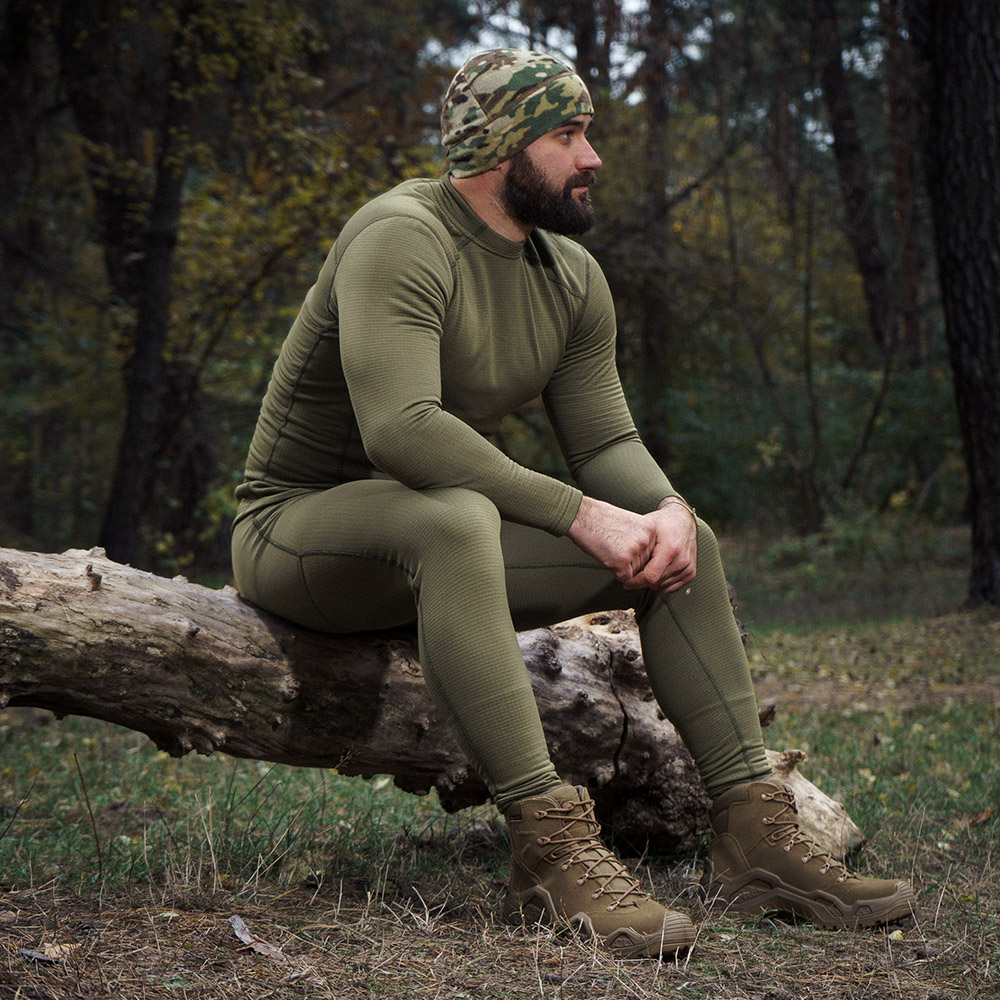
Winter military models are designed for use in temperatures ranging from 0 °C to -30 °C. Denser fabrics are used for this season (200 to 300 g/m² for merino wool, or thicker synthetic materials).
One of the best winter options is synthetic thermal underwear with an internal waffle structure (for example, fleece jackets such as Polartec Power Grid). The grid structure of these models creates numerous air channels. During movement, they release excess heat; when at rest, they retain it.
It is also worth considering multi-zone military thermal underwear. In these models, thinner, breathable inserts are placed on the back, underarms, and chest, where the body produces the most sweat, while denser insulated zones are used on the thighs, shoulders, and lower back.
Classic thermal underwear with a microfleece or brushed-knit inner surface is also suitable. It performs its function in severe frost when physical activity is low. The brushed inner surface creates a dense “air cushion” that reliably retains the body's natural warmth.
At the PROF1Group® online store, you can buy high-quality gear. Our consultants will explain which thermal underwear is best for military use and help you choose an option to suit your needs.