

What is Gore-Tex: the technology that changed the world of activewear
Since ancient times, people have been trying to protect themselves from the effects of atmospheric phenomena. Years of technology development have not been in vain, and a modern solution has been invented, a membrane material. Gore-Tex® successfully protects against precipitation and provides comfort on the move without creating a sauna-like feeling inside. That's why the brand has become the standard for waterproof clothing for tourists, climbers, military personnel, athletes and city dwellers.
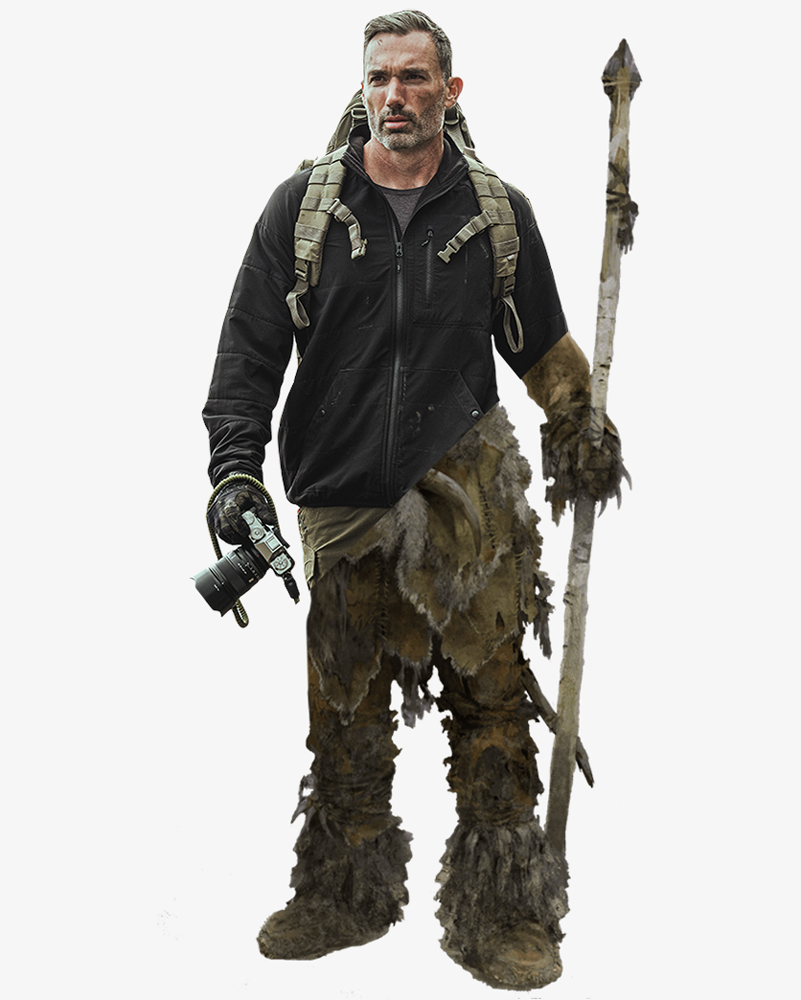
We'll explain what Gore-Tex® membrane is and why it's the best way to protect against rain, wind, and snow.
Contents
- What is Gore-Tex®?
- What are the properties of Gore-Tex® and how does it work?
- The history of Gore-Tex®
- Types of Gore-Tex® membrane layers
- Types of Gore-Tex® membranes
- Where is Gore-Tex® used?
- How to care for clothing with Gore-Tex® membrane?
What is Gore-Tex ®?
Gore-Tex® is a membrane material created by W. L. Gore & Associates. It is used in the production of clothing, footwear, gloves, and equipment. Its main advantage is the ability to protect against rain and wind while remaining breathable.

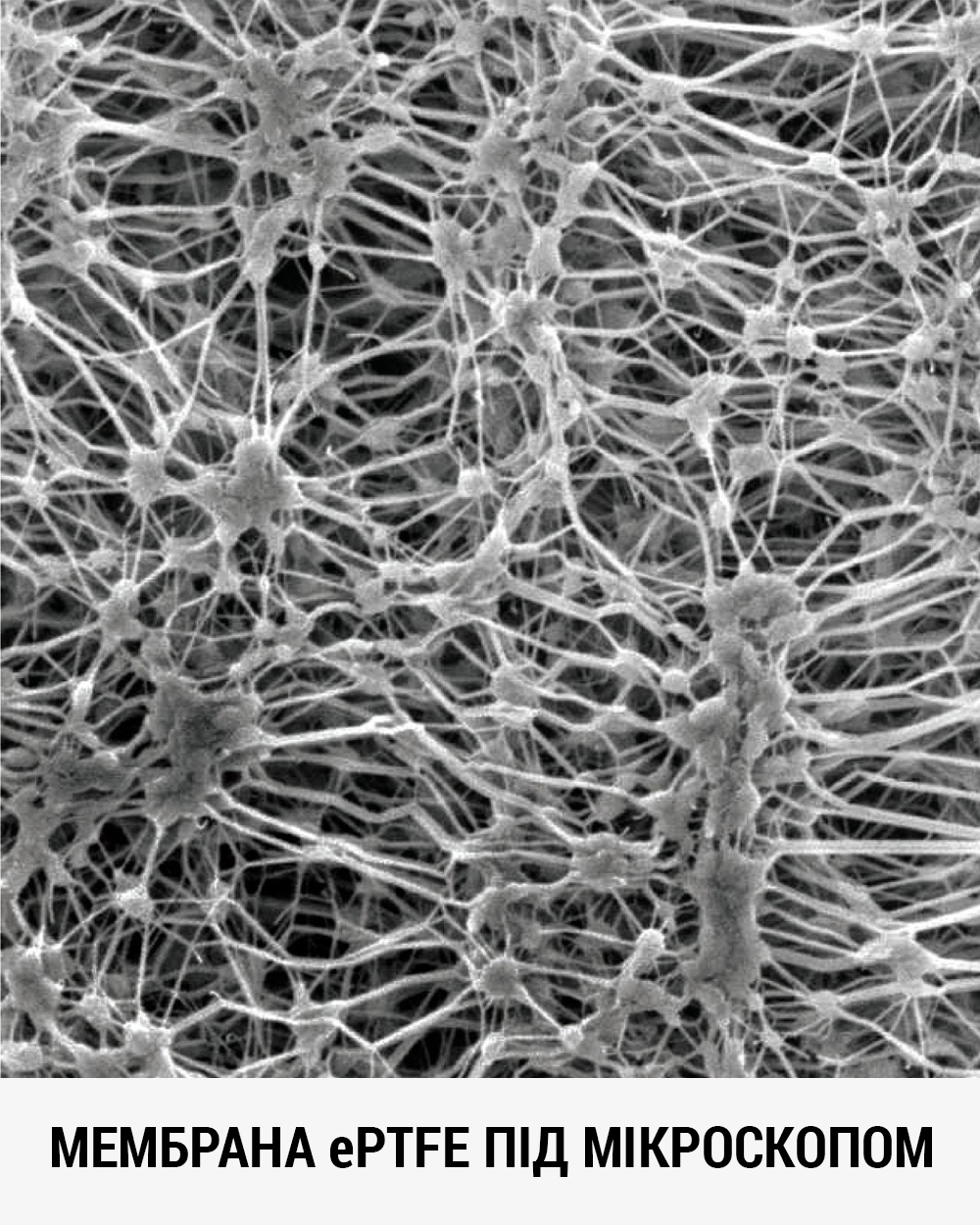
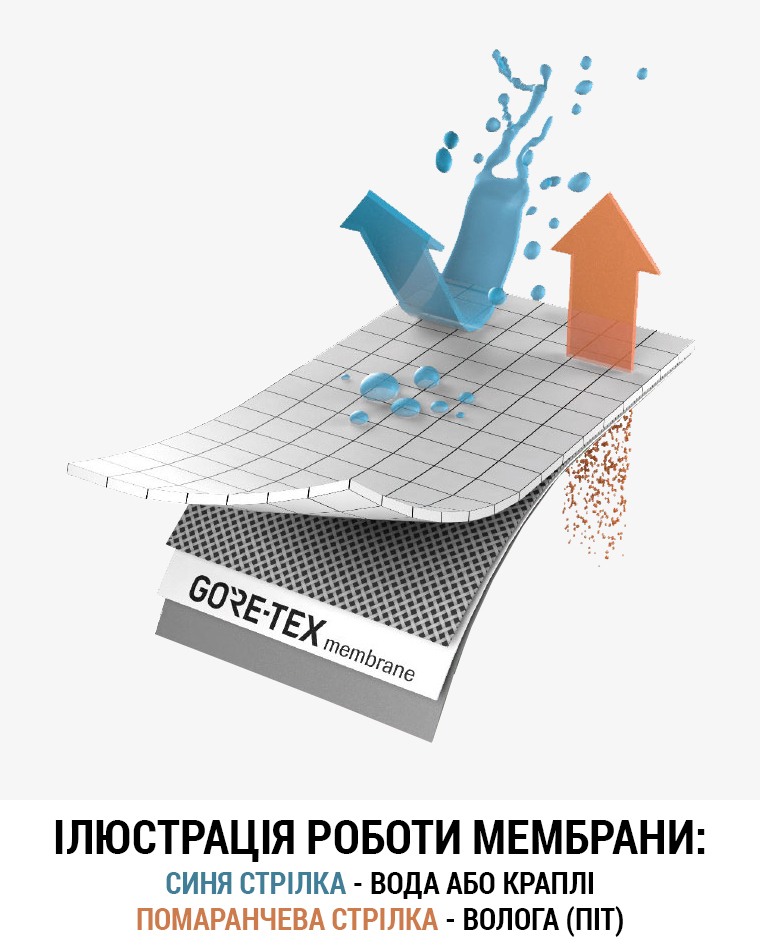
The technology is based on expanded polytetrafluoroethylene (ePTFE), which differs from conventional PTFE in its microporous structure. In the production process, the material is stretched to create a structure of tiny pores. Unlike conventional PTFE, which does not allow air or water to pass through, the microscopic pores in ePTFE are smaller than a drop of water but larger than a vapor molecule. Therefore, the Gore-Tex® membrane does not allow moisture to pass from the outside, but allows vapors to be removed from the body. This creates the same membrane effect that has made Gore-Tex® products popular around the world.
What are the properties of Gore-Tex ® and how does it work?
There are two indicators that measure the characteristics of both Gore-Tex® membranes and membranes of other brands:
- Water resistance (mm) – measured in millimeters of water column.
- Vapor permeability (g/m2/24h) – measured in grams per square meter per 24 hours.
These indicators are not always symmetrical, usually water resistance is greater than vapor permeability. Thanks to these indicators, you can orientate yourself for what kind of weather conditions, this or that thing is intended for.
Typical water resistance ratings, degree of protection and type of activity:
- up to 5 000 mm – moderate rain (suitable for urban use).
- 10 000 mm – heavy and prolonged rain or snow (long walks or hikes).
- 20 000 mm and more – monsoon or storm type precipitation (level of expedition equipment for a long stay in conditions of heavy and unpredictable precipitation).
The main characteristics of the membrane material that make it indispensable in difficult conditions:
- Water resistance. There are membranes with different characteristics that can withstand water column pressures from 1 000 to 28 000 mm. This allows you to choose the right equipment for a specific type of task.
- Vapor permeability. The structure of the membrane allows you to remove vapors from the body and keep you dry and comfortable. The level of “breathability” (vapor permeability) can reach 20,000 g/m2/day.
- Wind protection. Microscopic pores effectively protect against cold air, thereby preventing heat from being blown away from the body.
- Durability. There are currently no eternal fabrics and materials, but with proper care, products with a membrane can last up to 10 years.
The history of Gore-Tex ®
The history of W. L. Gore & Associates dates back to 1958 with Wilbert Lee Gore and his wife, Genevieve Walton Gore. Prior to founding his own company, Gilbert spent 16 years at DuPont researching fluoropolymers. In 1963, his son Robert W. Gore joined the family business after receiving a PhD in Chemical Engineering.

During his research, Robert discovered that polymers could be expanded differently than the standard way. Instead of gradually stretching the heated material, he applied a sudden stretch. Unexpectedly, this caused it to stretch by about 800% and the solid PTFE turned into a microporous structure consisting of 70% air. This is how ePTFE, or expanded PTFE, which is used to make the Gore-Tex® membrane, was created.

Starting in 1976, W. L. Gore & Associates began using the Gore-Tex® membrane in commercial products, introducing its first waterproof and vapor-permeable jacket. Already in 1978, the company began mass production of clothing with the membrane, and the following year introduced seam sealing technology.
The ePTFE material is widely used outside the clothing and equipment industry. It is now used in the medical field (implants, surgical sutures), the automotive industry, and in the creation of high-tech filters and cables.
In 1997, the patent for ePTFE-based fabric expired, so the production technology became available to other companies. As a result, products with the same or similar waterproof and vapor-permeable membranes are now available on the market.
Types of Gore-Tex ® membrane layers
When choosing clothing or equipment with Gore-Tex® membrane or other brands, you may encounter labels indicating how many layers of membrane material are in a particular product.
The membrane itself is a thin material that cannot be used on its own in the manufacture of fabrics, so for greater strength and durability, the membrane is placed under or between other layers.
There are the following types of membrane layers:
- 2L (2-layer)
- 2.5L (2.5-layer)
- 3L (3-layer)
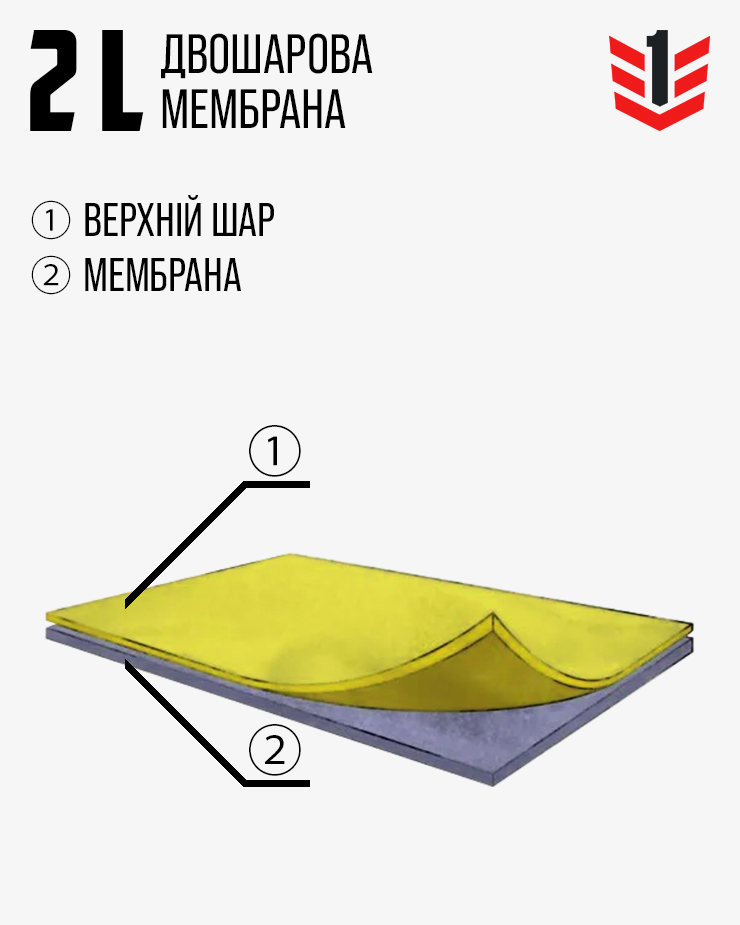
2-layer membrane (2L)
Type 2L membrane consists of:
- outer layer
- inner layer of the membrane
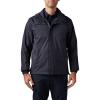
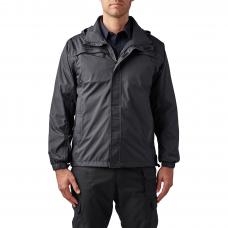
This type of membrane is suitable for clothing used for various types of outdoor activities, from running to hiking.
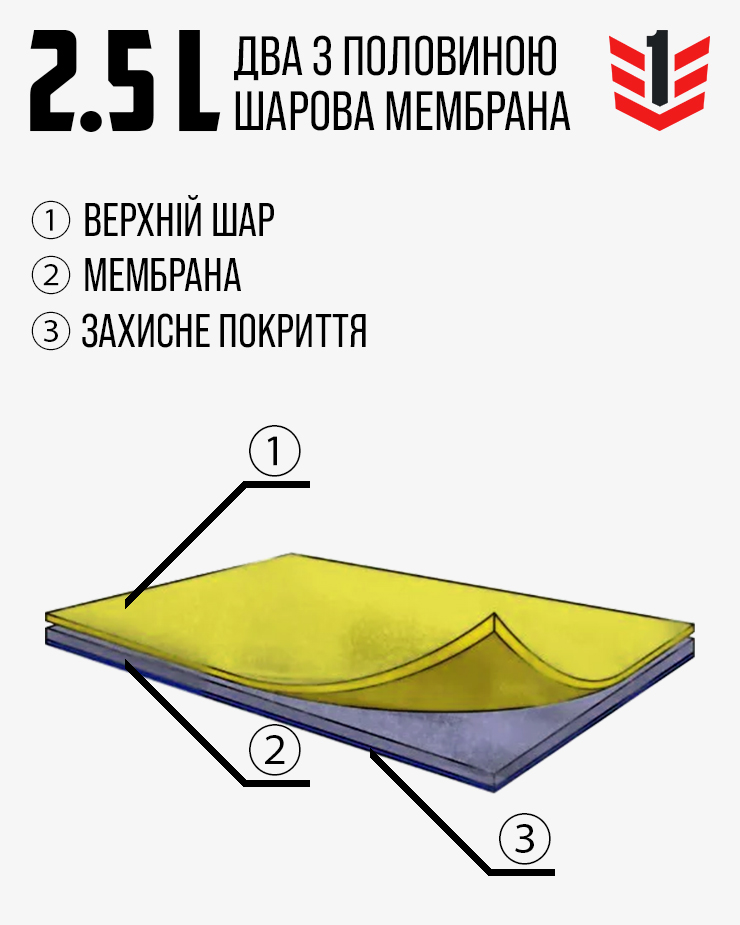
2.5-layer membrane (2.5L)
The 2.5L membrane consists of:
- outer layer
- membrane layer
- protective coating
The main difference between 2L and 2.5L is that due to the additional layer of fabric, products with 2.5L membrane have a better fit and are generally more comfortable.
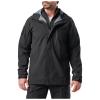
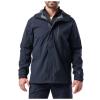
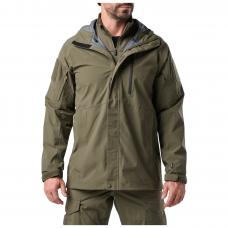
3-layer membrane (3L)
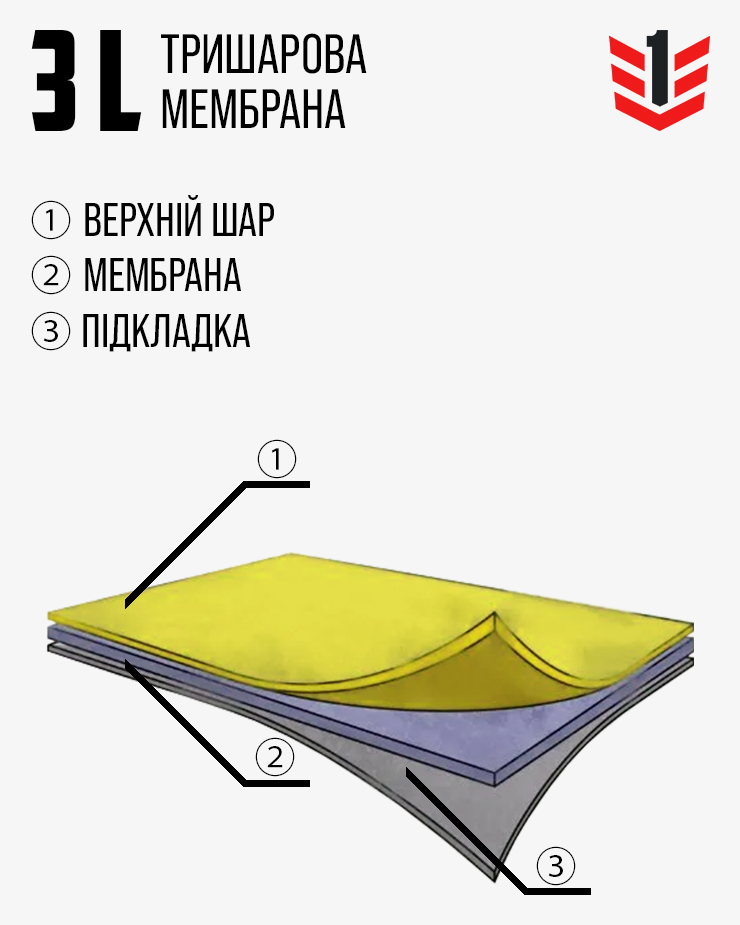
Type 3L membrane consists of interconnected layers:
- outer
- membrane
- lining
The key difference from all previous types is that all three layers are combined (laminated) together. This eliminates movement between the layers, which allows the product to wear less and last longer.
Types of Gore-Tex ® membranes
There are more than a dozen different subtypes of Gore-Tex® membranes used in the manufacture of different types of clothing and equipment for different purposes.
The most common types of Gore-Tex® membranes:
- Gore-Tex®
Classic version and universal version of the membrane. It is widely used for the manufacture of jackets, raincoats, etc.
- Gore-Tex® Pro
Compared to the classic Gore-Tex®, it is a more dense membrane. It is used in the manufacture of tactical, climbing and other specialized equipment.
- Gore-Tex® ShakeDry
A lighter and more breathable type of membrane compared to Gore-Tex® and Gore-Tex® Pro.
- Gore-Tex® Invisible Fit
Often used in trekking shoes and bonded to the upper layer of the shoe for better protection from precipitation.
- Gore-Tex® Surround
This type of membrane is used for footwear with an emphasis on greater breathability while still providing good rain protection.
- Gore-Tex® Paclite
A flexible and lightweight membrane that is designed specifically for the type of clothing that folds into its own pocket, such as compact jackets and pants.
- Gore-Tex® Infinium
This type provides good breathability and insulation from the weather, which is useful in outdoor clothing.
- Gore-Tex® Active
The most breathable, lightweight, fully windproof and wear-resistant version of the membrane. It is used for clothing intended for running, cycling and hiking.
- Gore-Tex® Windstopper
A type of membrane that provides good protection against wind, but little or no protection against water. Suitable for clothing worn in windy weather without precipitation.
- Gore-Tex® Thermium
An insulating layer is added to the main layers of the membrane, which slightly increases the weight of the product, but allows you to retain heat, which is important for winter equipment.
Where is Gore-Tex ® used?
It's hard to imagine exploring different parts of the world or performing tactical tasks without professional gear. To maximize efficiency in any situation, equipment with Gore-Tex® membrane is used. It is this kind of clothing that can protect a person from environmental influences, such as rain, snow, and squally winds, while ensuring body thermoregulation.
But where exactly is Gore-Tex® used?
Jackets and pants
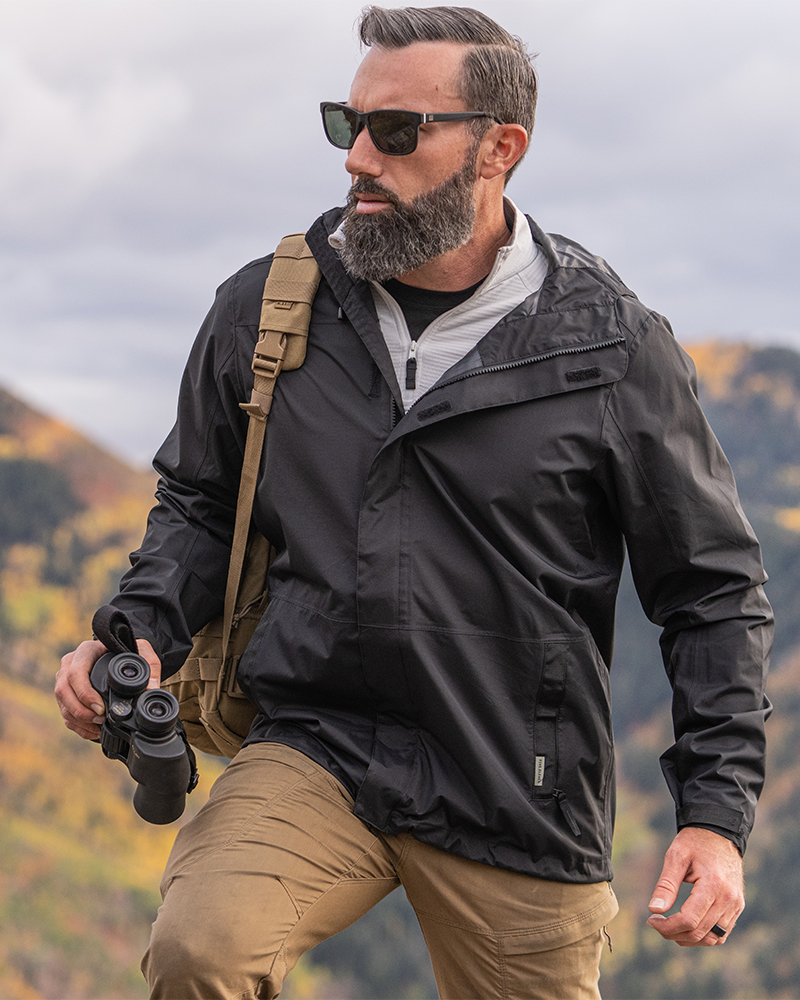
Outerwear has long been the main barrier between the human body and the weather. The latest technology has made it possible to remove heavy fur coats and put on lightweight and breathable clothing with Gore-Tex® membrane.
For each type of activity, you can choose the right waterproof jacket and waterproof pants that will create maximum comfort. Gore-Tex® Pro is used for heavy expeditions and where maximum wear resistance is required. Where you need lightness, maneuverability and vapor permeability, such as running or skiing, choose products with Gore-Tex® Active membrane.
Footwear
The Gore-Tex® membrane is used in various types of footwear, including Gore-Tex® running shoes, to provide moisture protection and maintain a comfortable microclimate for the feet. Specific types of membranes have been developed for footwear, allowing you to select shoes based on the specifics of activity and climatic conditions.
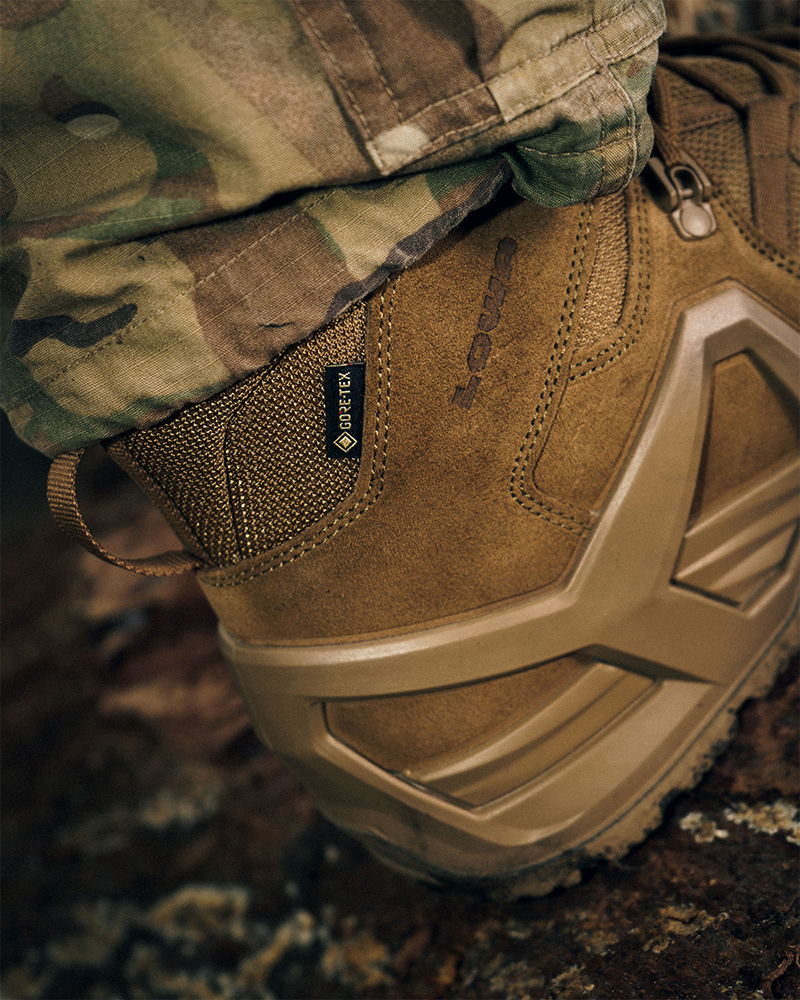
The main ones are:
- Gore-Tex® Extended Comfort: designed for warm conditions and high activity. It is used in running shoes and lightweight trekking shoes.
- Gore-Tex® Performance Comfort: a versatile membrane for a variety of weather conditions. It is used in trekking and mountain boots.
- Gore-Tex® Insulated Comfort: contains an additional layer of insulation for cold conditions. Ideal for winter and mountaineering shoes.
- Gore-Tex® Surround: provides ventilation from all sides, including the outsole, which is especially useful in the heat. Used in casual and trekking shoes.
Military and tactical equipment
Gore-Tex® is used in military uniforms, providing soldiers with protection from adverse weather conditions. The membrane is used in the uniforms and equipment of armies of different countries, providing waterproofness, wind protection and durability. This is especially important in conditions where the effectiveness of the mission depends on the reliability of the equipment.
Gloves
The Gore-Tex® membrane is being introduced into glove production, providing protection against moisture and wind while maintaining tactile sensitivity:
- Gore-Tex® Plus Warm: designed for freezing conditions, contains additional insulation for maximum heat retention.
- Gore-Tex® Active: provides high vapor permeability, suitable for active sports where ventilation is significant.
- Gore-Tex® Grip: provides excellent tactile sensitivity and grip, which is important for climbers and skiers.
Work clothes
In conditions that require prolonged exposure to the outdoors, workwear with Gore-Tex® membrane provides protection from rain and wind while maintaining comfort. This is important for construction workers, road workers, foresters and other professions where reliable protection from weather conditions is important.
How to care for clothing with Gore-Tex ® membrane?
Proper care of your Gore-Tex® membrane garment ensures that it retains its waterproof and vapor permeable properties for a long time. Pay attention to the care recommendations directly on the garment, as they may differ from manufacturer to manufacturer. Below are general recommendations on how to extend the life of membrane clothing.
Washing
Firstly, it is worth remembering that the following types of care products should not be used on products with Gore-Tex® membrane:
- bleaches
- softeners
- conditioners
- stain removers
- loose powder products
All of them can at least reduce its effectiveness, and at most irreversibly damage the membrane.
What kind of membrane detergents can be used:
- the best option – is specialized membrane care products (like Nikwax®).
- acceptable option – harsh detergents in the form of a gel.
- not a desirable option – capsules for washing, because they contain a conditioner that harms the membrane.
Sequence for washing Gore-Tex® garments:
- Before washing, check pockets and remove any items or objects.
- Fasten all zippers, buttons and hook-and-loop.
- If your washing machine does not have a special mode for sportswear, manually set the following settings:
- delicate cycle;
- temperature up to 40°C;
- minimum number of spins during the spin cycle.
- If non-specialized detergents were used for washing, an additional rinse cycle is required to remove detergent residues.
Drying
After washing, allow the water to drain from the product. To do this, hang the garment on a hanger in the bathroom, over a basin or outside. You can gently squeeze out the water with a squeezing motion without twisting or with a towel.
It is necessary to hang clothes where there is constant access to fresh air without direct sunlight and heat sources. After the excess water has drained, you can hang the product in a place where it can dry, following the previous recommendations about the absence of sunlight and heat sources.
If the manufacturer allows for machine drying, it is usually done at low temperatures of up to 60°C. But before you dry your garment in this way, make sure that the jacket or pants in question can be dried in this way.
Recovery of water-repellent properties (DWR)
DWR (Durable Water Repellent) is a special coating that prevents moisture from penetrating the fabric and also protects it from dirt. It is applied to the product directly by the manufacturer, or you can apply it yourself.
During active use of the garment or after washing, the outer layer of the fabric may lose its water-repellency. It can be restored in the following ways:
- Thermal activation. After washing and drying, iron the product at a low temperature (without steam) with a towel between the iron and the fabric. This will help reactivate the existing DWR impregnation
- Apply a new impregnation. If the thermal activation does not bring the desired effect, apply a water-repellent impregnation in the form of a spray or liquid, following the instructions of the product manufacturer. After applying the impregnation, it is recommended to re-dry the product in a dryer or iron it to activate it.
Additional recommendations for the care of membrane clothing
To extend the life of your Gore-Tex® clothing, you should not only follow the washing and drying recommendations, but also store and repair it properly. This way, your gear will last longer and will be able to please you with its functionality.
Storage:
- hang clothes on a hanger
- avoid direct sunlight
- avoid folding or squeezing the product
- it is advisable to ventilate the closet where the clothes are stored
In the event of a hole or cut in the membrane fabric, it should never be sewn up. This will not close the hole, but will only create additional holes nearby. To solve this issue, you need to use special repair kits for membrane fabrics. As a rule, they contain a set of cut patches or a small spool made of membrane fabric with an adhesive base.
Using membrane patches is very simple:
- Select a patch of the required size, or cut it with scissors.
- Wipe the glued area with a damp, alcohol-free cloth.
- Wait a couple of minutes for the moisture to evaporate.
- Peel off the protective layer and glue the patch to the damage area.
- Press the patch for a few minutes with your hands or a heavy object.
- Now your gear is almost as good as new!