

What is a multitool: purpose, types, areas of application
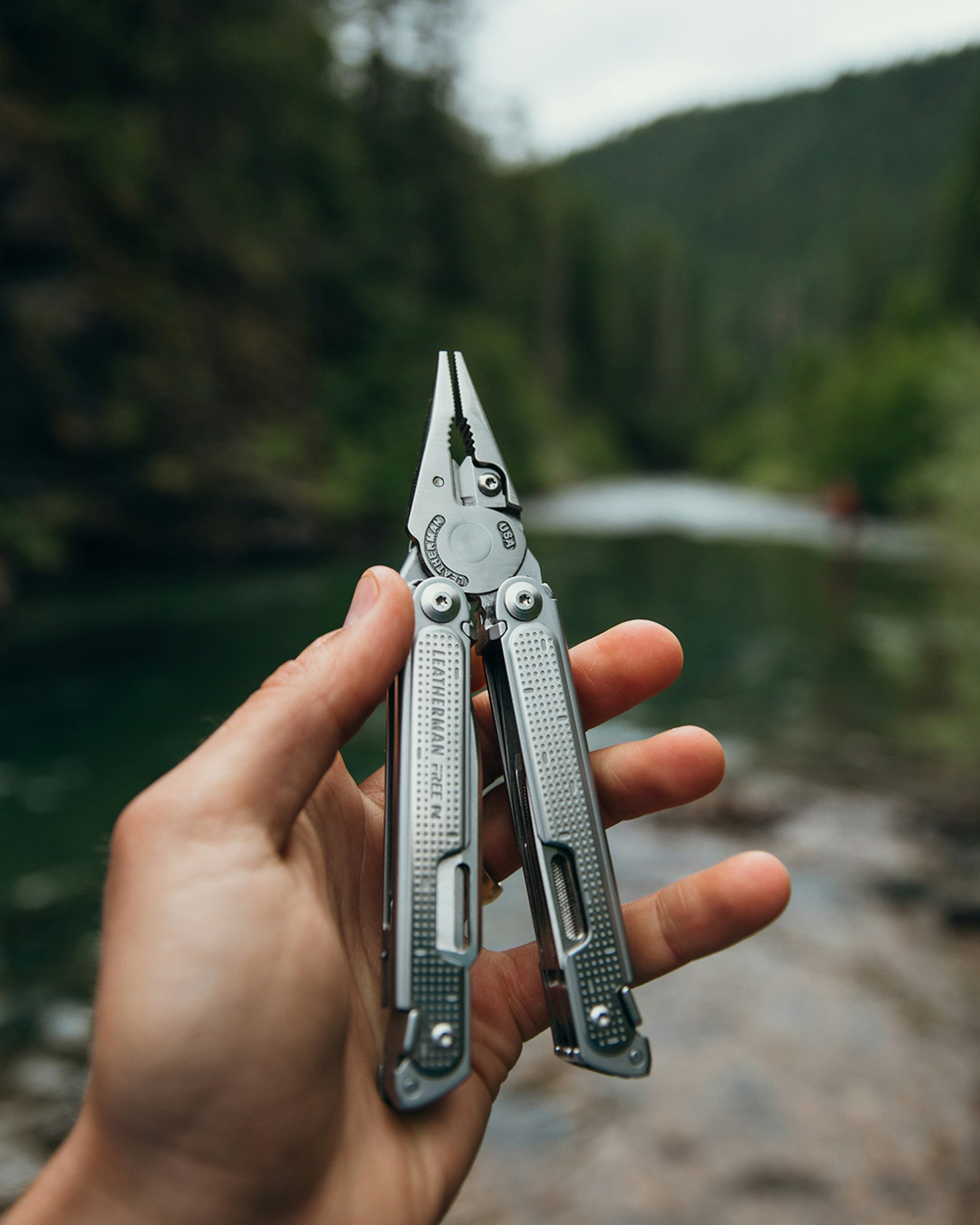
The multitool – is a compact and multifunctional tool that combines several to a dozen useful functions. The multitool can replace many standard tools at once, but its main advantage is its compactness.
It has long been a companion of people who value practicality and mobility. Such a gadget will always be at hand and will help to carry out minor repairs. It will also be a reliable companion for traveling, outings, and every day.
The PROF1Group® company is the official representative of the brands and in our assortment you will find multitools from Leatherman®, 5.11 Tactical®, Sturm Mil-Tec®, Ganzo® and others.
Content
- What is a multitool?
- History of the multitool
- Design, characteristics, and properties of a multitool
- Types of multitools
- How to choose a multitool?
What is a multitool?
The term multitool came to us from the English language “multi-tool” or “multitool“ is an abbreviation of “multifunctional tool”. A multitool is a compact device that combines analogs of full-size tools without losing their functionality. As a rule, the design of a multitool is based on pliers with other folding tools in the handles, for example:
- knife
- saw
- scissors
- screwdrivers
- bottle opener, etc.
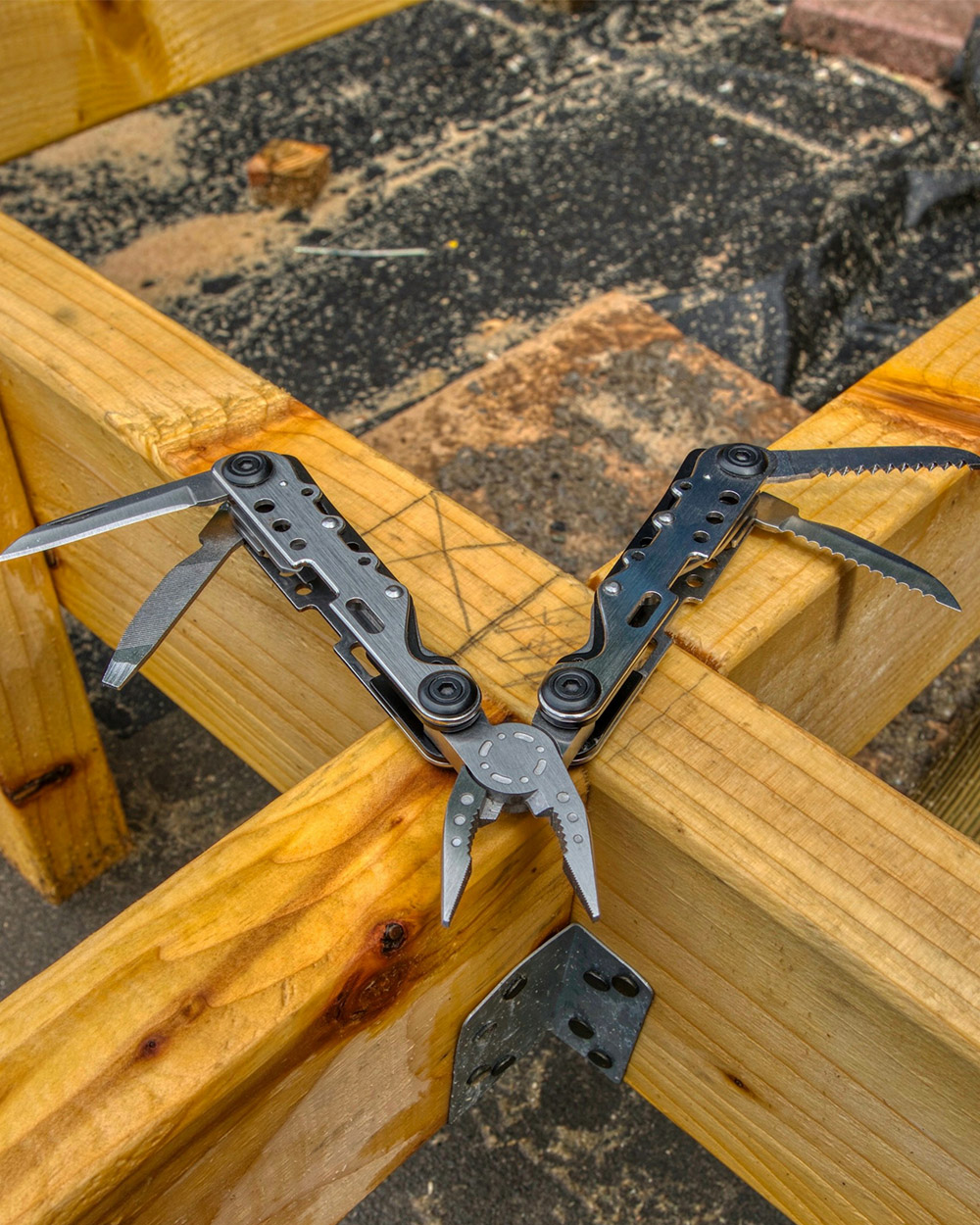
The compact design has been achieved through years of development and improvement. Therefore, modern multitools are slightly larger than folding knives. They can be comfortably carried in a pocket, and miniature versions can even be placed on a keychain.
History of the multitool
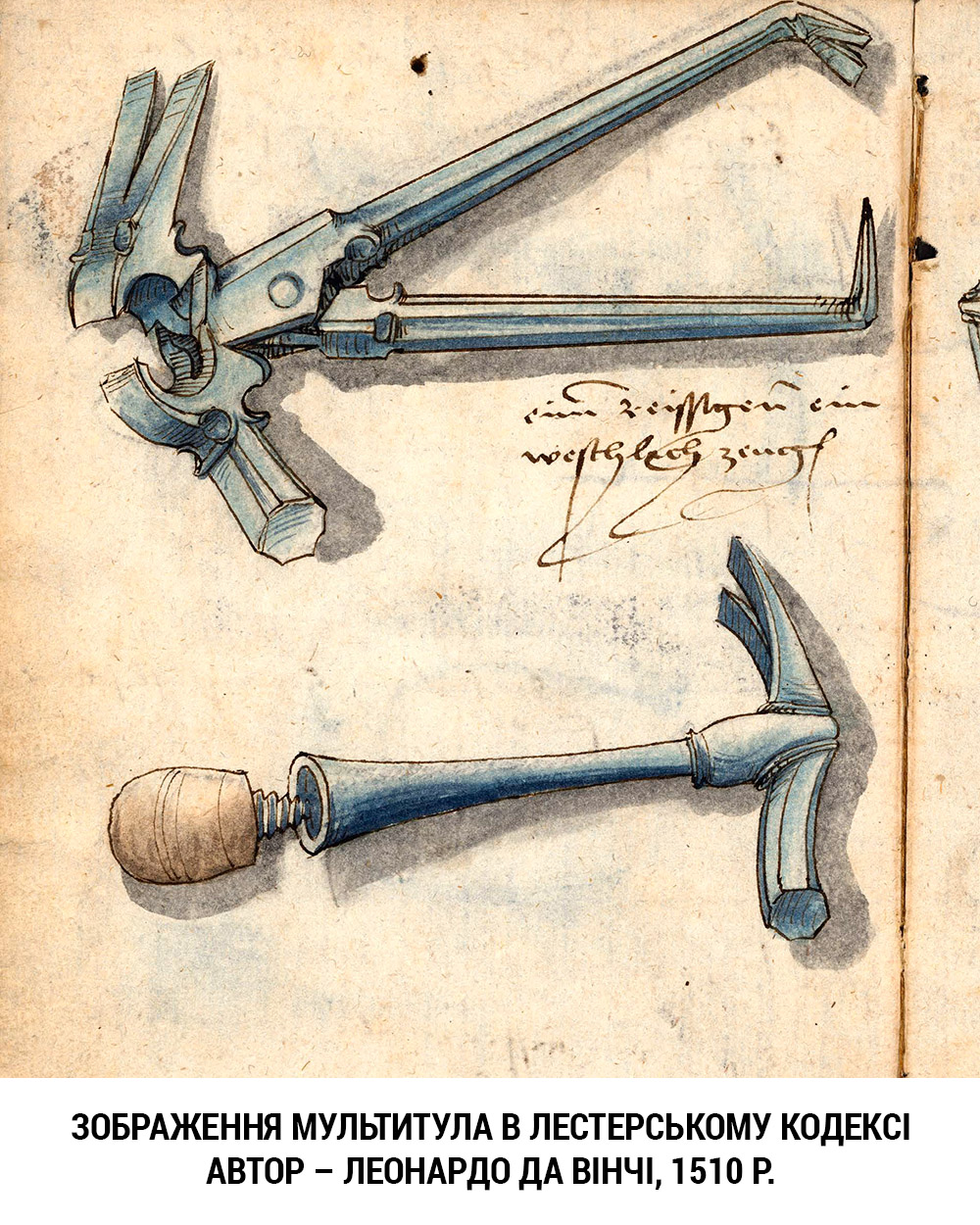
The first ancestors of modern multitools were found during archaeological excavations. They were attributed to the Roman Empire and date back to the IV century A.D. They were mostly combined cutlery. In the Middle Ages and the Renaissance, with the development of crafts and technology, more complex multi-tools appeared. Blacksmiths and craftsmen created tools that could perform multiple tasks. For example, pliers could combine the functions of a hammer, wire cutters, and nail gun.
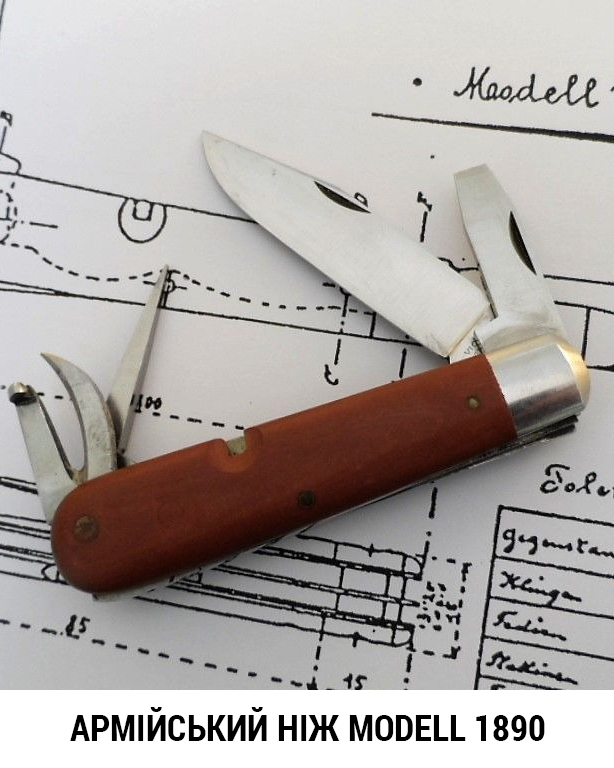
In the XIX century, with the development of industry and manufactories, the first patents for multi-tools were registered. At that time, the so-called folding army knives appeared, which had additional functions. Mass production began in the late 1880s when the Swiss army decided to equip its soldiers with a functional pocket knife called the Modell 1890. Somewhere around this time, the common name for these knives took root, and many people still refer to them as “Swiss”.
A little later, Karl Elsener, then the owner of a surgical equipment company, joined the production of these knives. He created an improved version of the knife that was designed for army officers. Patenting his invention in 1897, he also marketed it internationally, which restored prosperity to his company.

In 1909, Karl began using a variation of the Swiss coat of arms to label his products. In the same year, to memorialize his deceased mother, he named the brand Victoria. After the introduction of stainless steel in 1921, Karl's son renamed the company Victorinox®, combining Victoria and inoxydable (stainless steel).
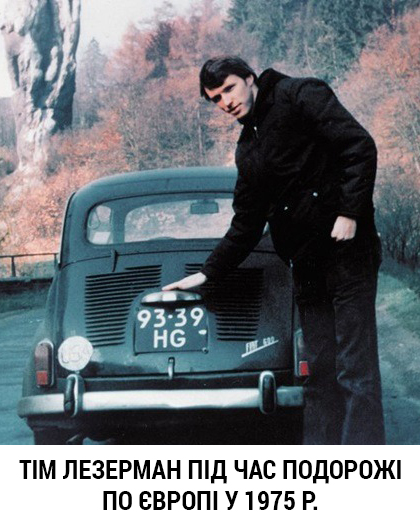
The idea for the modern version of the multitool came from Timothy S. Leatherman, who in 1975 went on a budget trip to Europe with his wife. They were constantly faced with the need to repair an old car and leaking plumbing in hotels. The skills he acquired while studying mechanical engineering at university helped him turn the experience of the trip into a universal tool based on pliers.
It took almost three years to create the first prototype and obtain a patent. He called his first commercial model of a multi-tool the Leatherman® PST. It was different from Swiss knives in that it was more applicable because it was not based on a knife, but on pliers. Since 1983, Leatherman® has been creating new models and focusing not only on multifunctionality, but also on reliability.
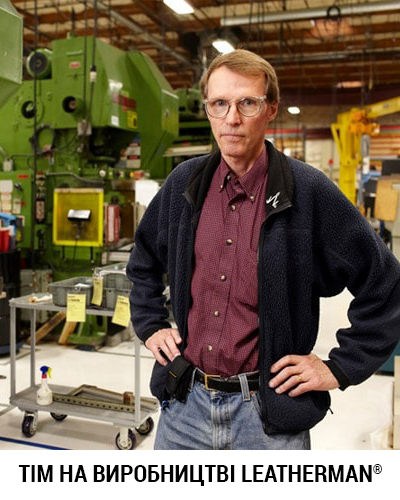
Nowadays, there are more than a dozen companies that produce their own models of multi-tools with different functionality and for different budgets. Because of this, every soldier or tourist can have at hand a dozen tools that fit in his or her pocket.
Design, characteristics, and properties of a multitool
The design of most multitools is based on pliers with additional tools in the handles. All of them are made of durable metals, often using steel grades such as 420HC, 154CM, S30V, and VG10. The ergonomic shape is complemented by anti-slip or protective coatings, such as Cerakote®. Some models can be made of titanium, which reduces weight and increases the wear resistance of the product.
The mechanism of operation of additional tools involves removing the desired element by opening it. There are also models with a special tool lock in the open position, which improves stability and simplifies work.
The dimensions of multitools may differ depending on their functionality and form factor. For example, classic models in the open position are more than 15 cm long and weigh approximately 350 g. Compact keychain-type models weigh less, around 50-100 g.
The main advantages of using the multitool:
- Compactness. Most models can be comfortably carried in a pocket and always be at hand.
- Versatility. You can perform many tasks: tighten a screw or nut, saw off a branch, cut food, bite off a wire, etc.
- Reliability. High-quality materials ensure a long service life of each element, and some manufacturers provide a long-term warranty for their products.
- Variability. The modern market offers many models with different functions, you can choose a typical or specialized multitool, for example, for the military, doctors, or tourists.
The most popular tools inside the multitool:
- Pliers with wire cutters.
- Saw for wood or metal.
- Can and bottle opener.
- Knife (regular and a paring knife for ropes).
- Screwdrivers (flat, Phillips, hex).
- Exotics: flint, spoon, awl (for fishermen).
Types of multitools
There is a wide range of multitools available, designed to handle a wide variety of tasks. Below are some examples of the most popular types.
Classic full-size multitools
The main tool is a pair of pliers, around which other elements (knife, screwdrivers, saw, etc.) are grouped. Their weight varies from 200-350 g, and their length in the open position is up to 16 cm. They are suitable for repairs, hiking, or automotive work.
Examples of classic multitools:
- Victorinox® SwissTool – 26 functions with lock-in open position.
- Gerber® Multi-Plier 600 – has spring-loaded pliers and a durable construction.
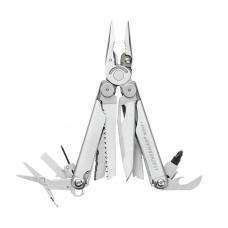
- Leatherman® Wave®+ – 16 tools with a set of bits.
Professional multitools
They often include a set of interchangeable bits, an extended set of tools housed in a reinforced design. Typically, such models are chosen by rescuers, electricians, mechanics, etc.
Examples of professional multitools:
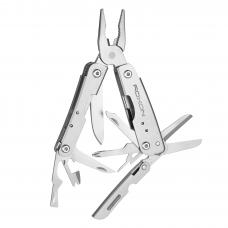
- Roxon® M2 – has a whistle, glass breaker and a set of bits.
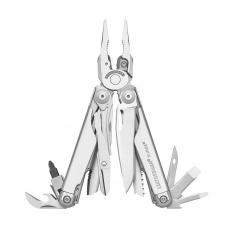
- Leatherman® Surge® – wire cutters and wire crimper.
- 5.11 Tactical® LE EMT MultiTool 2.0 – spring-loaded glass breaker, seat belt cutter, oxygen cylinder wrench.
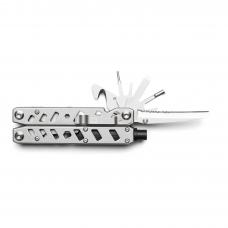
Multitools keychains
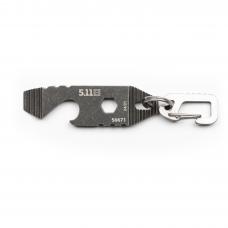
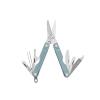
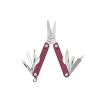
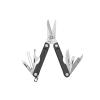
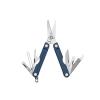
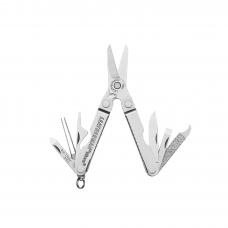
Miniature models weighing 15-50 g, attached to keys or backpack. Mostly contain basic tools, such as a knife or screwdriver. Used as a small helper that is always nearby.
Examples of keychain multitools:
- NexTool® MINI Flagship NE20146 – 10 functions inside, including scissors and a file.
- Leatherman® Micra® – 10 tools, including tweezers, nail file and screwdriver.
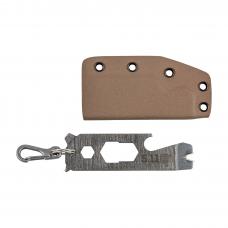
- 5.11 Tactical® EDT Multitool – 10 functions and a Kydex sheath.
- 5.11 Tactical® EDT Pry – a compact assistant and a stylish accessory.
Swiss Army Knives
The basis is a folding knife with tools in the handles. They have an average size and weight of around 50-150 g. They are well suited for solving everyday tasks.
Examples of Swiss Army knives:
- Victorinox® Huntsman – wood saw and awl for hiking.
- Victorinox® Climber – 14 functions, including scissors and knot hook.
Specialized multitools
- Electrical. Functions: USB ports, flashlights, voltage meters. For example, Roxon® Phantom with LED backlight.
- For barbecue. Functions: tongs, spatula, meat knife. For example, models from Victorinox® with heat-resistant handles.
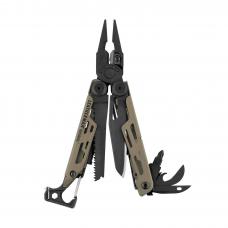
- For tourism and survival. Functions: flint, glass breaker, slingshot, compass. For example, Leatherman® Signal – includes a whistle and a diamond knife sharpener.
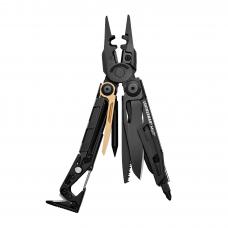
- Tactical (military). Functions: impact elements, seat belt cutter. For example, Leatherman® MUT® EOD – hammer, tool for disassembling weapons and C4, a tool for removing jammed cartridges.
Unusual form factors
- Belt buckles. Combine functionality and aesthetics. Example: Gerber® Shard.
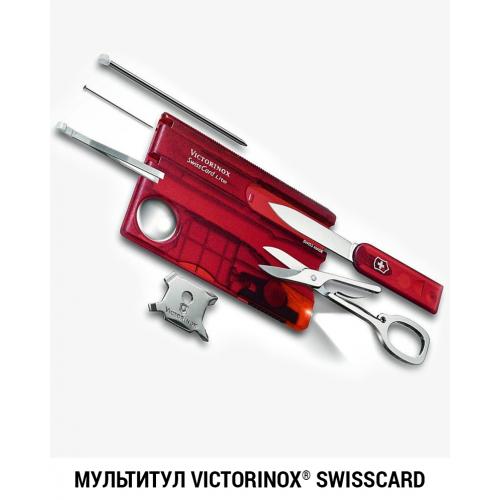
- Card multitools. Credit card size includes a knife, screwdriver, ruler. Example: SwissCard by Victorinox®.
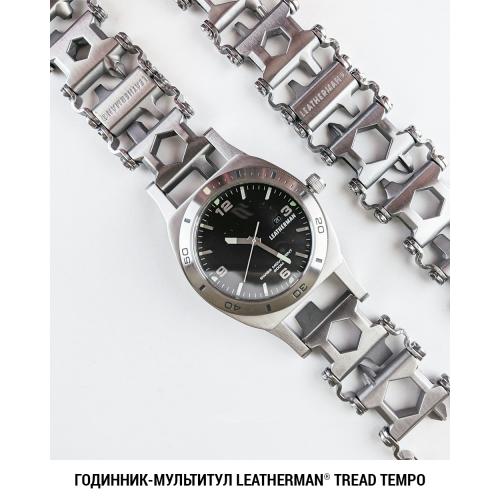
- Bracelets. Links contain hex keys and screwdrivers. Example: Leatherman® Tread is a stylish accessory with 29 tools.
How to choose a multitool?
Choosing a multitool is like finding the perfect travel companion: it should be reliable, comfortable, and ready for any surprises.
4 key rules for choosing a multitool:
- Define the task.
- Check the ergonomics.
- Pay attention to the locks.
- Familiarize yourself with the brands.
Now let's take a closer look at each of the points below.
Versatility is not always what you need
When selecting a multitool, focus on what needs you need to cover. If it's an option for everyday urban use, then minimal features will suffice. It can be a keychain like the Leatherman® Micra® or 5.11 Tactical® EDT Hex, or a compact Victorinox® Classic SD Swiss knife. They will help you open a parcel, tighten glasses frames or cut a thread, and at work, open a parcel or a package of goodies.
For hiking and fishing, you require a “combat” set: a branch saw like the Gerber® Suspension-NXT, a fire axe, and a can opener to keep you from going hungry by the river.
If you are a do-it-yourselfer, look for models with pliers and wire cutters. For example, the Leatherman® Wave®+, which can be used to pull a nail or cut a wire.
It's best to hold the multitool in your hands before buying
Ergonomics that fit your hand are the key to comfortable and long-lasting use of the multitool.
When choosing, pay attention to:
- Comfortable size. Hold it in your hands in different positions to make sure it's ergonomically correct.
- Comfortable weight. Put it in your pocket, hold it at arm's length, perform typical manipulations.
- Ease of opening. Check whether you can open the tool with one hand, which may be a very real necessity.
- Take a closer look at the outer coating. A special rough coating or rubberized handle grips, such as the SOG® PowerPint, will help you hold the multitool even in the rain.
Tool fixation is the key to reliability
Budget models without locking the tool in the open position can harm its owner.
Why is this important?
- Working with sharp tools. If the saw jumps off unexpectedly or the blade closes spontaneously, you could injure your fingers.
- Active point load. During active manipulation of the tool, it is subjected to a lot of pressure, and fixing the tool at this point will reduce the possibility of injury.
A brand name is not an empty phrase
Many companies have earned the trust of users for years and fought for the right to be called the best in their niche. That's why they do everything right, use proven materials and sophisticated technologies. Compared to little-known one-day firms, brands are responsible for possible defects or premature wear of their products.
- Leatherman® – is the benchmark for multi-tools. They have been working for years in difficult conditions and are not afraid of falls from a height or accidental swimming in a pond.
- 5.11 Tactical® – constantly cooperate with the military and various special services. They specialize in compact and technical multi-tools
- Victorinox® – Swiss quality with over 140 years of history.
- Gerber® – is a brand that is focused on the tourist audience. The Bear Grylls series helps to survive in the mountains, swamps, and even in the urban jungle.
- SOG® and CRKT® – are reliable tools that look like an artifact from Mad Max and work like clockwork.
Bonus 5 tip!
Many functions are not always good. It's better to choose a model with 5-7 functions in a compact package than a large multitool with 20 tools that is always in your backpack or a distant drawer.