



What is ballistics in simple words?

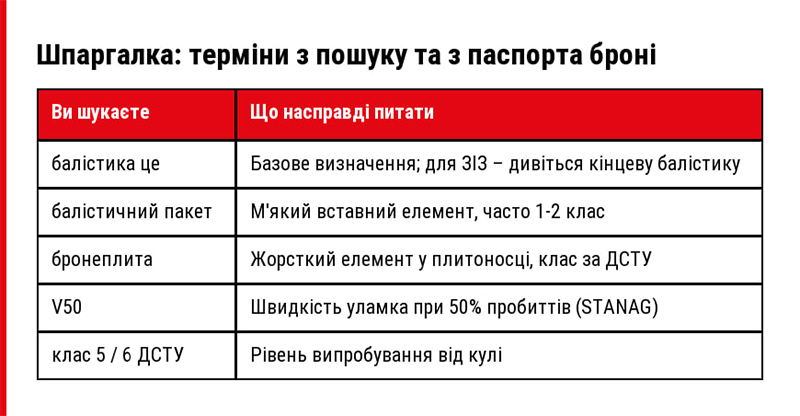
When looking at the label next to a plate carrier, you may see terms like “DSTU Class 5,” “V50 650 m/s,” or “UHMWPE” People search for “what is ballistics” not because they are interested in physics, but because they want a practical answer: why can two seemingly similar armor plates differ in price by several times? Another common question is where cutting costs becomes truly dangerous — on the groin protector, on side ballistic inserts, or on the protection level of the armor plate itself?
You won't find the word “ballistics” printed on the label. It is neither a brand nor a body armor model or a marketing term — it is the science of projectile motion and impact. For buyers, the most important area is terminal ballistics, which studies what happens when a bullet or fragment strikes armor. This is the foundation for protection ratings, armor plate thickness, and the choice between soft ballistic inserts and ceramic armor plates.
We'll help anyone choosing body armor, a plate carrier, a groin protector, or a ballistic insert understand these concepts and read product specifications without relying on the “magic of numbers.”
What Is Ballistics? A Simple Explanation
Ballistics (from the Greek word ballein – "to throw") is the branch of mechanics that studies the flight and impact of projectiles. In everyday language, the term is often confused with "ballistic protection," but these are two different concepts.
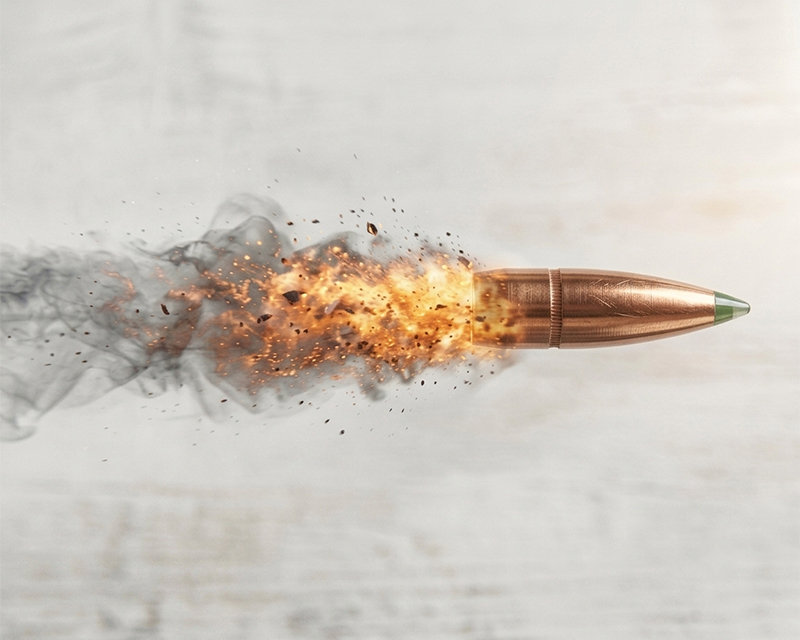
In short, if someone asks "What is ballistics?", the answer is: it is the science that explains how a bullet leaves the barrel, travels through the air, and impacts a target or body armor.
The Three Branches of Ballistics – Which One Matters to You?
1. Internal Ballistics
This covers everything that happens inside the firearm's barrel: powder gas pressure, bullet acceleration, and rifling-induced spin. For choosing body armor, this knowledge is rarely necessary, except for understanding why different firearms produce different muzzle velocities and therefore require different levels of ballistic protection.
2. External Ballistics
This deals with the projectile's flight after it leaves the barrel: trajectory, wind influence, and velocity loss over distance. It is essential for snipers and artillery operators. For infantry choosing personal protective equipment, it is less significant because impacts at close range generally carry more energy than shots fired from longer distances.
3. Terminal Ballistics
This is the most important branch when it comes to protective equipment. It examines what happens at the moment of impact: penetration, deformation, ricochet, and the creation of secondary fragments. Terminal ballistics is what manufacturers evaluate during ballistic testing, firing at armor samples or measuring fragment velocity using the V50 rating defined by STANAG 2920.
Practical takeaway: when reading the specifications of an armor plate or ballistic insert, you are looking at the results of terminal ballistics—whether the material can stop an impact with a specified amount of energy.
How Does Ballistics Translate into a "Protection Rating"?
Manufacturers don't label armor as "stops bullets well." Instead, they specify a protection level according to a standard, the threat type, and sometimes the fragment velocity in meters per second.
DSTU 8782:2018 is the Ukrainian standard for ballistic personal protective equipment. Protection Levels 1–6 are based on standardized testing, including specific ammunition types, firing distances, and acceptable backface deformation.
STANAG 2920 (NATO) is commonly used to evaluate fragmentation protection. It measures the velocity at which a standard fragment has a 50% probability of penetrating the tested sample (V50). This is not the same as a rifle armor rating, but it is critically important for groin protectors and side ballistic inserts.
A common misconception is assuming that "Level 6 is always better than Level 5." The best protection is the one that matches your actual threats without unnecessarily sacrificing mobility. An armor plate weighing 2–3 kg more than another is not just a number—you will notice every additional 500 grams after a week in the field, especially on your shoulders and cummerbund.
Ballistic Protection Materials Explained
Soft Armor Inserts (UHMWPE / HPPE)
Ultra-High-Molecular-Weight Polyethylene (UHMWPE), such as Dyneema®, Spectra®, and similar materials, consists of multiple layers that disperse impact energy by deforming the fibers. These inserts are lightweight, flexible, and highly effective against fragments and many handgun threats. They are commonly used in groin protectors, plate carrier cummerbunds, and soft helmet inserts.
Hard Armor Plates (Ceramic + Composite)
Ceramic materials such as Boron Carbide (B4C) and Silicon Carbide (SiC) break up and deform the bullet upon impact, while the UHMWPE backing captures the resulting fragments. Although heavier than soft armor, they provide rifle-rated protection. Plate shapes such as SAPI, Shooter's Cut, and multi-curve designs improve ergonomics while also influencing ballistic performance because the impact angle changes the armor's effective thickness.
Metal Armor (Steel and Titanium)
Metal armor is less common in modern infantry equipment because of its weight, but it is still used in certain applications. The ballistic principle remains the same: absorb impact energy and prevent penetration.
Soft Armor, Hard Plates, and Groin Protection: Building a Complete System
Effective ballistic protection is a complete system rather than a single component:
- Plate carrier – the platform itself; it does not stop bullets.
- Armor plates – protect the chest and back against direct ballistic threats.
- Ballistic inserts – side cummerbund inserts, groin protectors, and sometimes throat protectors (gorgets), covering areas beyond the armor plates.
- Ballistic helmet – follows separate standards but is also based on terminal ballistics.
One of the most common mistakes is saving money in the wrong place: buying premium Level 5 or Level 6 plates while leaving the side pockets empty or using no groin protection at all. Bullets do not always strike the center of the chest, and fragments and ricochets are also part of ballistics—they do not care about marketing illustrations.

In Practice: Why I Always Focus on Complete Coverage
Whenever discussing essential equipment, I always return to one simple idea: ballistic protection is a complete system, not just a single plate covering your chest. Shoulder protectors, throat protection, and side inserts are often postponed for "later," but later frequently never comes. Once you understand terminal ballistics, the conclusion is obvious: every uncovered area becomes a weak point in your protective system, regardless of how advanced your front armor plate may be.

Having worked in the military equipment industry for over 25 years, I've seen the difference between a "protection rating on paper" and a system people can realistically wear every day. That difference becomes obvious when someone tries on a plate carrier with a full set of ballistic inserts and attempts to lie prone or sit inside a vehicle. Excessive stiffness, poorly shaped plates, or empty cummerbunds are not minor details—they directly affect ballistic protection in real-world conditions, where impact angles and body position constantly change.
Common Mistakes After Learning What Ballistics Is
Here are several practical tips to keep in mind:
- Don't confuse weight with protection level. A lighter armor plate is not necessarily weaker if its materials and construction meet certified testing standards.
- Don't ignore secondary fragmentation. Even if the ceramic stops the bullet, fragments from both the projectile and the ceramic strike face can still pose a hazard. High-quality backing materials are a crucial part of terminal ballistic performance.
- Don't choose the "highest protection level" without considering your mission. Some users only need Level 2 soft armor inserts for groin protection, while others require Level 5 or Level 6 rifle plates. There is no universal "best" solution.
- Don't overlook service life and storage conditions. Ballistic materials degrade over time due to UV exposure, moisture, and impacts unrelated to ballistic threats. Dropping an armor plate onto concrete is not a durability test—it may be a reason to replace it.
- Don't rely on a single number in the product name. "Ballistic protection" advertised on an online marketplace without any certified testing is not the same as equipment tested according to DSTU or recognized STANAG standards. Before saving money, consider the value of your health—and sometimes your life.
In Summary: Ballistics and Your Equipment Choices
Ballistics explains how a projectile moves and how it is stopped. Ballistic protection is the engineering solution to terminal ballistics: absorbing impact energy, preventing penetration, and minimizing secondary injuries.
Before purchasing body armor, ask yourself three questions:
- What threat am I expecting (handgun, rifle, or fragments)?
- Which parts of my body need protection (armor plates, ballistic inserts, groin protector)?
- How much weight am I realistically willing to carry every day—not just during a fitting?
To summarize, understanding what ballistics is isn't simply an academic exercise. It allows you to evaluate armor specifications without being misled by marketing claims. Choose a complete protection system that matches your mission rather than simply selecting the highest protection rating. You can find armor plates, ballistic inserts, and plate carrier accessories in the PROF1Group® ballistic protection catalog. If you are unsure whether a specific plate is compatible with your plate carrier, it is always better to verify compatibility before purchasing than to modify your equipment later in the field.
Author: Kostiantyn Liesnik