

Cordura Fabric. Overview of Characteristics and Comparison with Ripstop
When it comes to manufacturing reliable military gear, the strength and wear resistance of the materials play a key role. Cordura has become one of the most popular fabrics for the production of military clothing, tactical equipment, and body armor. It is capable of withstanding extreme stress, intense friction, and harsh weather conditions.
What Is Cordura?
It is an extremely durable nylon fabric made from high-strength yarn, originally developed by DuPont® for military applications. Today, Cordura® is a registered trademark of the Invista group.
This fabric is made entirely from durable nylon 6.6 yarns. Long, continuous fibers provide high tear strength. The material features a water-repellent treatment and a polyurethane coating.
Cordura® fabric retains its shape and integrity for a long time, even under intensive use in field conditions. That is why it is used in the most heavily stressed parts of equipment – backpack bottoms, reinforcement panels, straps, plate carriers, holsters, pouches, and cases.
Key Characteristics of CORDURA® Fabric
The material has a range of properties that make it a popular choice for manufacturing military and outdoor equipment.
Strength and Tear Resistance
This is the key property of Cordura fabric. It is achieved through the use of cut and re-twisted high-density polyamide fibers. This yarn structure and tight weave allow the material to withstand loads without tearing when snagged on branches or metal structures.
Abrasion Resistance
Cordura has one of the highest abrasion-resistance ratings among technical textiles according to the Martindale test (an internationally standardized method for evaluating durability). The fabric surface withstands more than 100,000 abrasion cycles. During this process, its fibers do not break down or pill.
Military clothing made from Cordura withstands constant friction against metal parts, concrete, rocks, and equipment.
Water Resistance and Water-Repellent Properties
Cordura is not completely waterproof on its own. To protect it from moisture, manufacturers use an external DWR treatment and an internal polyurethane coating.
Thanks to the surface treatment, water droplets and liquid dirt roll off the fabric. This helps prevent the material from becoming wet. To maintain the protective layer, Cordura products should be periodically treated with special water-repellent sprays.
The internal polyurethane coating provides waterproof protection from the inside. It is available in different ratings, ranging from 1500 to 5000 mm of water column. A 1500 mm coating can easily withstand ordinary rain, while a 5000 mm rating provides protection against prolonged heavy downpours and prevents water from penetrating when pressed against wet ground.
Durability and Service Life
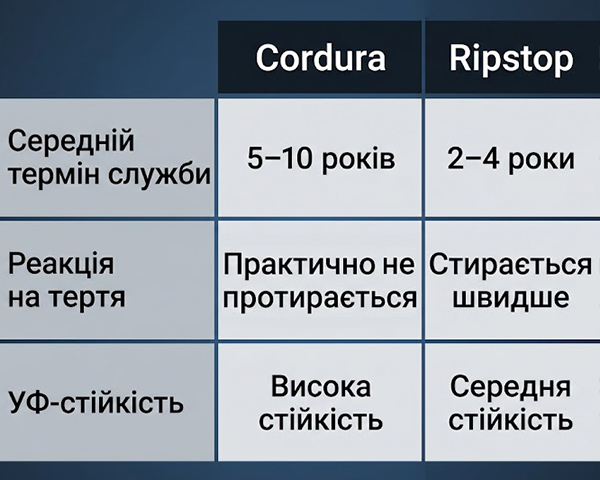
Cordura is positioned as a fabric designed for long-term use. Under intensive everyday use, it can last from 5 to 10 years or even longer. For military personnel, this means less frequent equipment replacement and a lower risk of damage while carrying out tasks.
Weight and Density
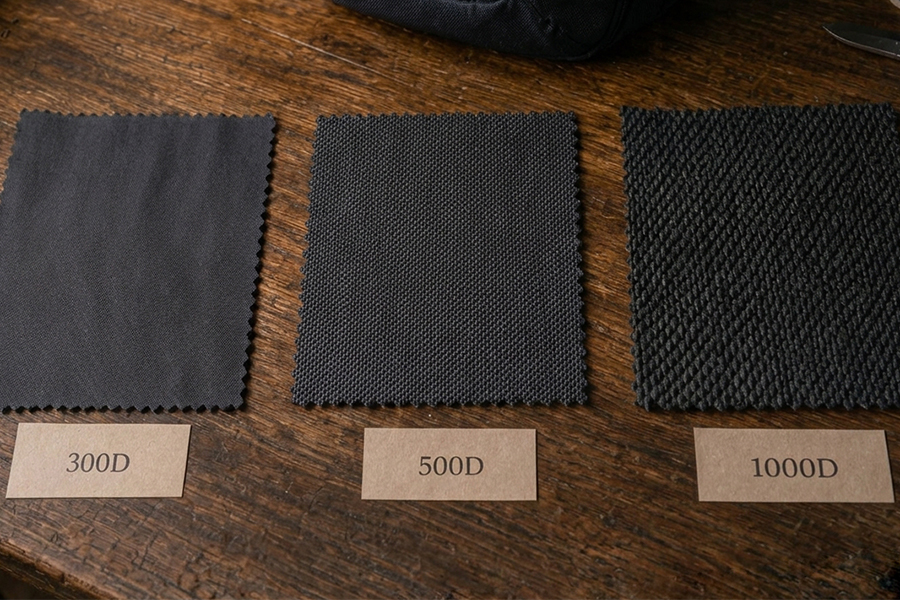
Fabric density and weight are measured in denier (D). This parameter indicates the thickness and weight of the yarn. The higher the number, the thicker the fiber, meaning the fabric itself is heavier, coarser, and stronger.
Cordura 1000D is the heaviest and densest option, making it best suited for body armor, plate carriers, heavy backpacks, and tactical footwear.
Cordura 500D offers approximately 80% of the strength of the 1000D version while weighing 30–35% less. It is used to manufacture modern load-bearing systems and pouches.
Cordura 300D / Lite is a lightweight version of the fabric. It is used to make equipment where reducing overall weight is important.
Advantages and Disadvantages of CORDURA®
Like any high-tech material, this fabric has its own characteristics and limitations.
Advantages of Cordura®:
- long-lasting color retention;
- enhanced abrasion resistance;
- resistance to dust and dirt;
- high tear and abrasion resistance;
- resistance to melting when exposed to accidental sparks;
- availability in different fabric densities;
- long service life under intensive loads;
- water-repellent properties and the option of additional protective coatings.
The main disadvantages of Cordura include:
- noticeable weight and stiffness;
- a distinctive rustling sound during active movement;
- the need for additional treatment to achieve waterproofing and seam sealing.
Cordura is practically air-impermeable, meaning the body underneath cannot “breathe”. For this reason, the fabric is not used as the primary material for everyday clothing.
What Types of CORDURA® Are Available?
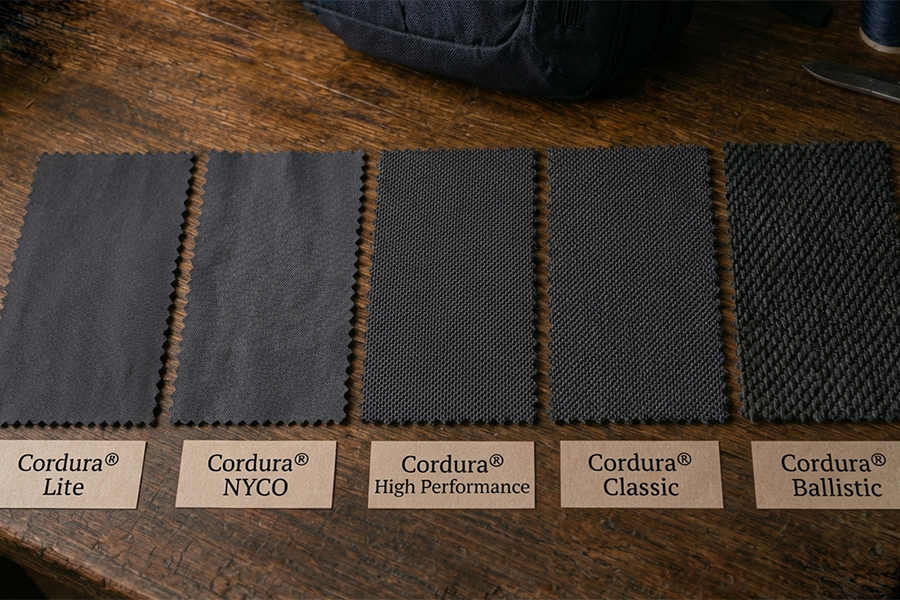
The manufacturer has developed several key fabric ranges. Each has specific characteristics, density, and applications.
Cordura® Classic features a rough, slightly matte texture and provides maximum resistance to snags, tears, and prolonged friction. This fabric is used to manufacture military plate carriers, tactical backpacks, specialized footwear, and workwear for extreme conditions.
Cordura® NYCO (Nylon/Cotton) is a blended material that combines nylon fibers with natural cotton. This fabric is softer and more comfortable against the skin.
Cordura® Ballistic was developed to provide protection against severe mechanical damage, punctures, and abrasion.
Cordura® Lite and Lite Plus are lighter than classic versions but considerably stronger than ordinary nylon.
Cordura® High Performance is made from polyester fibers rather than nylon. This makes the fabric less expensive.
What Is Made from CORDURA®?
This fabric is most commonly used to make:
- pouches;
- military and outdoor backpacks;
- bags, suitcases, and motorcycle touring gear;
- cases for weapons, equipment, laptops, and devices;
- bags, suitcases, and motorcycle touring gear.
- covers, work trousers, gloves, elbow and knee pads;
- components of body armor, load-bearing systems, and waist belts.
Cordura is rarely used as the only fabric in military products. It is generally used for parts of clothing or equipment that are most vulnerable to wear and damage.
How to Distinguish Genuine Cordura® Fabric from Counterfeits
To avoid buying a cheap alternative instead of genuine Cordura, look for the following quality indicators:
- Genuine material or products made from it always feature official sewn-in CORDURA® labels identifying a licensed manufacturer.
- The rough surface does not have a cheap glossy sheen (except for the specialized Ballistic range).
- The inner coating is not sticky, has no strong chemical odor, and does not peel when the fabric is folded.
- A drop of water placed on the face side of the fabric forms a bead and rolls off.
- Quality fabric meets the specified weight standard, while counterfeit material is either too light or unnaturally stiff due to an inexpensive polyester coating.
Comparing Cordura with Other Fabrics
When choosing a material for equipment or clothing, it is important to understand the differences between the properties of various fabric types.
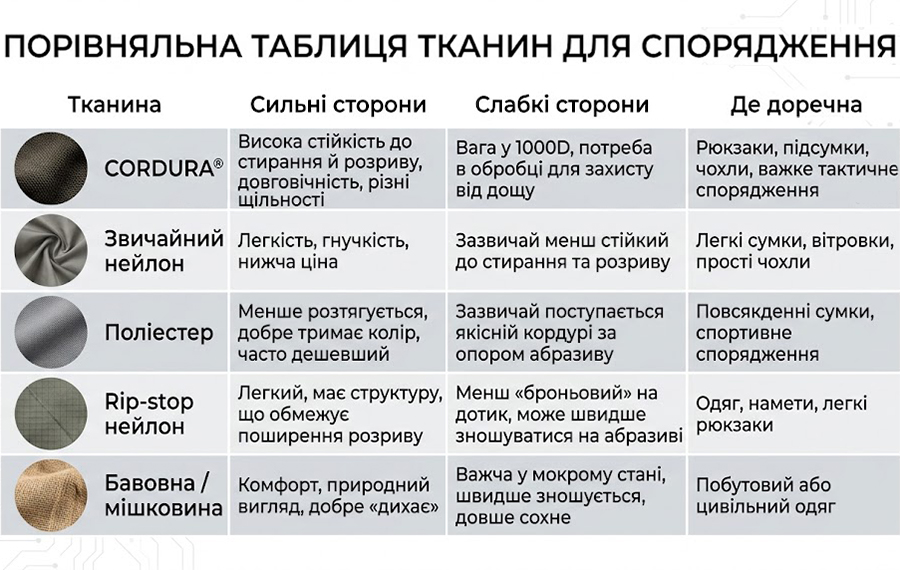
Ripstop is well suited for lightweight clothing due to its low weight, but Cordura® performs significantly better under demanding everyday use.
At the PROF1Group® online store, you will find a wide selection of military products. Our consultants will help you choose exactly what you need.