



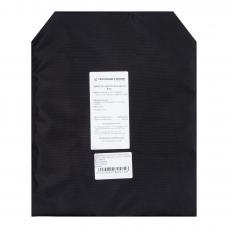
A fighter’s protection is not limited to hard plates. Alongside them, a flexible layer works, covering what armor does not cover and stopping fragments. This material is hidden in body armor covers, cummerbunds, and separate modules, remaining almost invisible. Let’s break down how soft ballistic protection is designed, what it is made of, and where it is really needed.
What is soft ballistic protection
This term refers to flexible ballistic packages made from strong fiber, which do not provide the rigidity of a plate but catch fragments and pistol bullets. It is soft ballistic protection that is responsible for areas where mobility is important, not the maximum armor class. Such a layer will not save from a rifle bullet; hard armor protection is needed for that, but it is lightweight and almost does not restrict movement. In essence, this is the first echelon that supplements, rather than replaces, plates.
How soft protection differs from armor plates
Comparing them directly is not entirely correct, because their tasks are different. Still, the differences are immediately visible:
- flexibility of the construction, which follows the shape of the body;
- lower weight compared to hard plates;
- higher comfort during prolonged wear;
- its own level of protection and its own purpose.
Plates handle rifle threats, while the soft layer takes on fragments and pistol calibers. Therefore, a well-built equipment setup usually combines both types rather than choosing only one.
What materials soft ballistic protection is made from
Effectiveness depends on the fiber. A modern ballistic package is most often made from aramid or ultra-high-molecular-weight polyethylene UHMWPE. These threads are very strong in tension: they catch a bullet or fragment, deform them, and distribute the energy across the layers.
The denser and higher-quality the weave, the better the package absorbs impact with less thickness. Thanks to this, modern materials provide protection where a much heavier set was previously required.
What tasks soft ballistic protection solves
The main work of this layer is anti-fragmentation. It covers the body from secondary damaging elements: fragments, shards, and debris after an explosion. Soft modules also increase the overall level of equipment by covering areas left open by a plate carrier. Often, such a layer supplements body armor and plate carriers, for example in the form of a groin protector (groin protection), which covers the lower abdomen and groin. Demand for this has grown, and today ballistic protection in Ukraine is increasingly equipped with such modules.
Where soft ballistic protection is used
There are more areas of application than it may seem. Flexible packages are placed in various equipment components:
- body armor and its soft covers;
- plate carriers as an addition to plates;
- cummerbunds that wrap around the torso;
- abdominal and groin modules;
- shoulders and forearms;
- neck and throat;
- side modules.
Each such zone separately may seem secondary, but together they close gaps in overall protection. For shoulders, for example, separate shoulder protection is used, which does not interfere with shouldering a weapon. The more fully the additional zones are covered, the fewer chances a random fragment has.
Advantages of soft ballistic protection
The advantages come from the nature of the material itself. Low weight and flexibility provide mobility, which means less fatigue during a long outing. Comfort allows it to be worn longer, and the fighter is less tempted to remove extra protection. At the same time, soft ballistic protection prices has different levels, from basic packages to professional solutions, so an option can be selected for almost any budget. It is important to remember that saving money rarely pays off, and it is worth focusing on class and quality, not only on the price tag.
Protection classes of soft ballistic packages
The level is described by classes according to standards, most often according to the NIJ scale. Soft packages usually cover the following threats:
- fragments and shards according to anti-fragmentation standards;
- low- and medium-class pistol bullets;
- combined threats in combination with hard plates.
Rifle bullets remain the responsibility of hard armor, and this is important to understand when assembling a kit. If you plan to buy soft ballistic protection, first determine the required class and purpose, and clarify the parameters of a specific model and availability in the product card.