




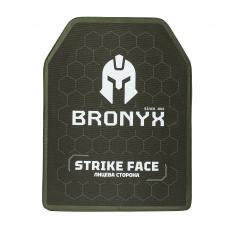

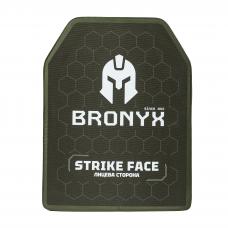
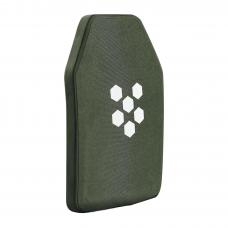
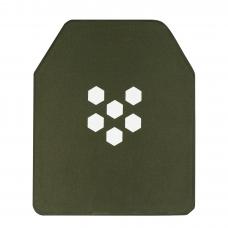
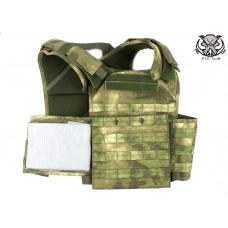
Ceramic armor plates provide the best protection against rifle and armor-piercing bullets. Steel is powerless against such threats, while ceramic withstands the impact. The secret lies in the construction: hard ceramic on the outside, composite backing inside. The front layer is made from aluminum oxide or silicon carbide. The plate thickness is usually from 20 to 30 millimeters. Below, we will break down the structure, advantages, protection classes, and storage rules.
How ceramic armor plates work, the combination of ceramic and composite materials
Stopping a bullet happens in fractions of a second in several stages:
- The ceramic layer takes the impact and destroys the bullet core.
- The energy is distributed over the area instead of hitting one point.
- The composite backing catches bullet fragments and ceramic debris.
- The multilayer base absorbs the remaining energy before it reaches the body.
That is why ceramic and composite materials always work together. The hard layer breaks the bullet, while the softer one catches the fragments. The bullet speed drops already in the first millimeters. One without the other will not provide such a result. The backing is most often made from ultra-strong polyethylene or aramid. Ceramic is designed for several hits in one zone, not for unlimited service life.
Advantages of ceramic armor plates
The main advantage is a high class of ballistic resistance. Ceramic stops 7.62 mm rifle bullets, and higher classes also stop armor-piercing ones. A steel plate of the same class weighs about 3.5 kg. A ceramic one is closer to 2-2.7 kg. This is a direct weight reduction and a noticeable increase in mobility. The composite back does not release secondary fragments outward.
Less load on the back provides comfort during long wear. Less weight means higher mobility on a march. Many plates have a curve for the chest. This shape improves the fit and does not interfere with movement. Ceramic plates for body armor easily fit most plate carriers.
How ceramic armor plates differ from other types of plates
Each type of plate has its own strength. Steel is cheap, but heavy and creates dangerous fragments upon impact. Unlike polyethylene armor plates, ceramic stops armor-piercing ammunition. However, polyethylene better withstands impacts and falls. In terms of protection class, ceramic armor plates outperform steel and polyethylene. The price for this is fragility and a higher cost. The shelf life of ceramic is usually from five to ten years.
Protection levels of ceramic armor plates
The class of the plate defines its protection level and list of threats. Usually, the American NIJ scale is used as a reference:
- class III stops regular 7.62 mm rifle bullets;
- class IV stops .30-06 caliber armor-piercing bullets;
- special classes cover narrow tasks and threats.
Choosing a class is always a balance of weight, price, and threat. There is little sense in taking a class higher than the task requires. An extra class means extra weight and extra money. Check the marking by the certificate, not by the sticker. Class III is designed for several consecutive hits. Only class IV stops the heaviest armor-piercing bullets.
How to choose a ceramic armor plate
The choice begins with the real threat and task conditions. First comes the class, then the size and cut for the plate carrier. Only after that should you look at the brand and price. A quality ceramic armor plate has a certificate and honest class marking. For protection against fragments, it is combined with soft ballistic protection. Check the weight and thickness: they affect comfort. Make sure the plate fits evenly into your carrier. A common plate size is 25 by 30 centimeters. M, L, and XL versions are available for different body sizes.
Features of use and storage of ceramic armor plates
The weak point of ceramic is fragility. A strong impact or fall causes microcracks and reduces the service life. After a strong impact, it is better to replace the plate immediately. Hidden cracks are not always visible to the eye. Therefore, the plate must be handled carefully:
- do not throw the plate and protect it from sharp impacts;
- inspect the surface after falls and hits;
- store in a dry place without compression or overheating;
- replace the plate if there are cracks or visible damage.
Before buying ceramic armor plates, clarify the warranty and storage period. Wear and store the plates in a cover to protect the surface. Check the specifications and availability in the product card.