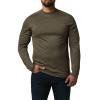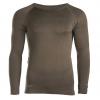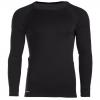





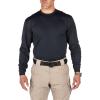
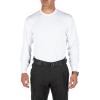
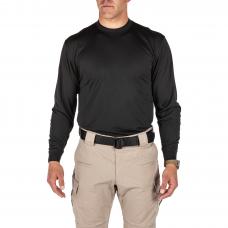
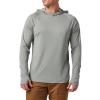
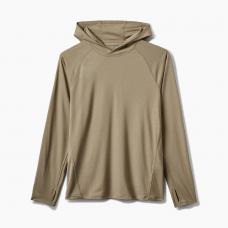
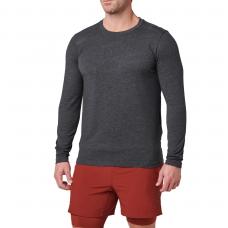
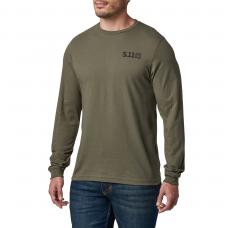
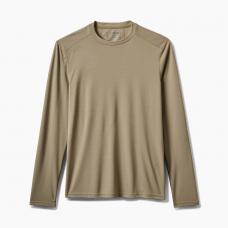
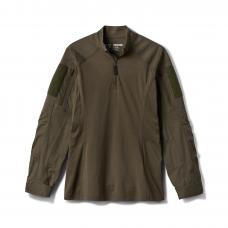
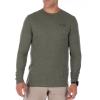
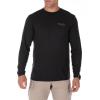
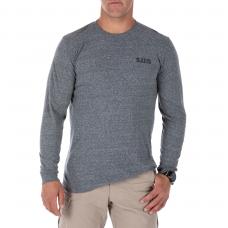
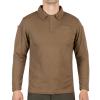
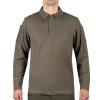
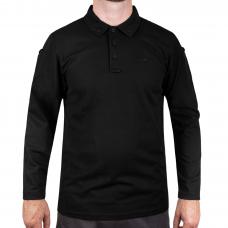
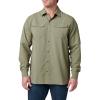
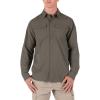
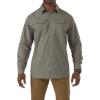
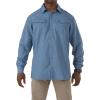
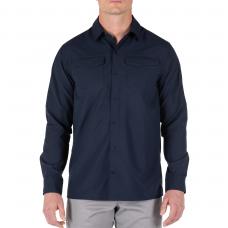
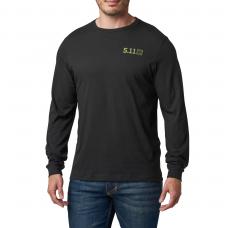
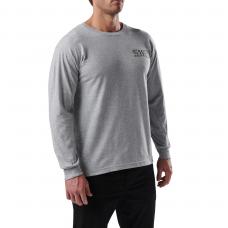
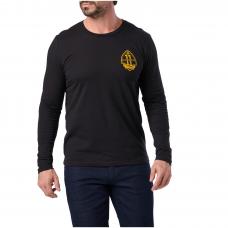
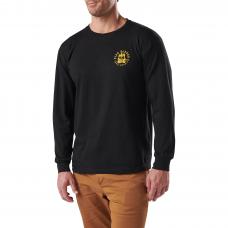
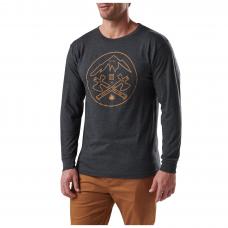
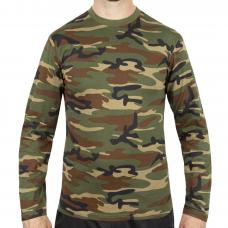
Men’s long sleeve shirts in the PROF1Group® category are functional long-sleeved garments for military personnel, law enforcement professionals, instructors, hikers, athletes and users who need a comfortable upper layer or base layer for everyday wear. This category includes tactical, military, sports and casual models: from lightweight long-sleeved T-shirts to thermal base layer tops, moisture-wicking long sleeves, long-sleeved polos, hooded models and tactical shirts. This assortment makes it possible to choose a men’s long sleeve shirt for different tasks: training, service, work at the range, wearing under gear, hiking, active recreation or an urban wardrobe.
Unlike a regular everyday top, a modern men’s long sleeve shirt often performs not only an aesthetic but also a practical function. It can work as a base layer, wick moisture away from the body, and protect the arms from sun, dust, light wind and contact with equipment. In a tactical environment, this is especially important because tactical clothing must not restrict movement, create unnecessary bulk under body armor or a load-bearing system, dry quickly after physical activity and remain comfortable throughout a long day.
What is a men’s long sleeve shirt
A men’s long sleeve shirt is an upper garment or base layer with long sleeves. Structurally, it is closer to a T-shirt, but it covers the arms better and offers more options for use in changing weather conditions. It usually has a crew neck, a soft fit, a straight or slightly fitted cut, elastic sleeves and a material that does not restrict the movement of the shoulders, elbows and torso. Tactical and sports models may use technical synthetic fabrics, blended materials, elastane, flat seams, moisture-wicking treatment or a quick-drying fabric structure.
The main difference between a long sleeve shirt and a T-shirt is the long sleeve. A T-shirt is better for hot weather or short activities, but it leaves the arms exposed. A men’s long sleeve shirt with long sleeves is more versatile: it covers the forearms and reduces skin contact with equipment straps, backpack shoulder straps, sun, dust or vegetation. For military personnel, hikers and athletes, this is an important practical advantage, especially when spending a long time outdoors or working with equipment.
A long sleeve shirt differs from a sweatshirt by being thinner, lighter and better suited to a layered clothing system. A sweatshirt is usually warmer, bulkier and more often used as a mid-layer or casual pullover. A long sleeve shirt is lighter, dries faster and works better under a jacket, fleece, body armor, plate carrier or tactical vest. That is why a tactical long sleeve shirt is often considered a versatile foundation for a field, training and urban clothing set.
The areas of use for men’s long sleeve shirts depend on the material and cut. Cotton and blended models are comfortable for everyday wear, travel, office work, trips out of town and low-intensity active recreation. Synthetic and elastic models are better suited for training, intensive movement, running, hiking, range use and wearing under gear. Thermal tops made from merino wool or functional blends are relevant as a base layer in cool weather, when it is important to retain warmth without overheating during movement.
Why men’s long sleeve shirts remain popular
Men’s long sleeve shirts remain popular because of their versatility. The same type of garment can be used in the city, during training, while traveling, on duty, during shifts, at the shooting range, on a hiking route or as part of an everyday wardrobe. A long sleeve shirt is light enough not to create unnecessary bulk, but at the same time more practical than a T-shirt when the arms need to be covered or when a first layer is needed under other clothing.
Comfort is the second reason for their popularity. Modern long sleeve shirts are designed with mobility in mind: they should not pull at the shoulders, rub under the arms, interfere with bending the elbows or create rough folds under equipment. Elastic fibers, soft fabrics, a well-thought-out cut and seams that better withstand active use are used for this purpose. If a long sleeve shirt is used as a base layer, it is especially important that it does not irritate the skin and does not retain moisture after physical activity.
The seasonal range of a long sleeve shirt is wider than that of a regular T-shirt. In warm weather, a lightweight sports long sleeve shirt helps cover the arms from sun and dust without overheating the body. In transitional seasons, it works as a standalone top or as a first layer under a fleece, shirt, softshell or jacket. In winter, a thermal top or a long sleeve shirt made from functional fabric is used as part of a layered system: the material closest to the body wicks moisture away, while insulating and protective layers are added on top.
Another advantage is easy combination with other wardrobe elements. A long sleeve shirt can be worn with cargo pants, jeans, tactical pants, shorts, a fleece jacket, vest, field shirt or membrane jacket. Neutral colors such as black, gray, olive, navy, coyote or Ranger Green work well with both military and civilian clothing. Camouflage versions are appropriate for field use, training, hunting, fishing and outdoor scenarios where a muted palette is important.
Tactical and military long sleeve shirts
A tactical long sleeve shirt is not just a long-sleeved T-shirt in a military color. Its value lies in the fact that it is adapted for active movement, long-term wear and compatibility with gear. For members of the Armed Forces of Ukraine, instructors, law enforcement professionals and users who spend a lot of time in field conditions, decorative elements are not the priority. Practical properties matter more: moisture wicking, ventilation, quick drying, elasticity, wear resistance and a comfortable fit under other clothing layers.
A military long sleeve shirt can be used as a base layer under body armor, a plate carrier, a load-bearing system or a field jacket. In this scenario, it is critical that the fabric does not gather into rough folds, does not rub the skin under straps and does not retain excess moisture. During active movement, the body sweats, and wet cotton fabric may remain damp for a long time. That is why synthetic or blended materials, which wick moisture better and dry faster, are often chosen for intensive use.
For instructors and users working at a training area or shooting range, a long sleeve shirt is convenient because it does not restrict arm and shoulder movement. It allows the user to work with equipment, carry a backpack, wear an upper protective layer and remain in a comfortable temperature range. A long sleeve shirt also protects the forearms from contact with straps, carabiners, shoulder straps, hook-and-loop fasteners, rough edges of gear or surfaces encountered during training.
Shooters and law enforcement professionals value clothing that does not distract them. In practical terms, this means that the sleeve should not slip down, the seams should not press under gear, the fabric should not restrict the torso, and the color should match the task. For urban or duty use, black, navy, gray or neutral shades are often chosen. For field conditions, Olive, Ranger Green, Dark Coyote, TDU Green, Multicam, Woodland and other muted colors are relevant, as they work better with tactical clothing and gear.
Compatibility with gear is one of the key requirements for tactical clothing. A long sleeve shirt should work properly under a plate carrier, backpack, load-bearing harness, tactical belt, fleece or jacket. If the fabric is too thick, it creates extra bulk and may interfere with ventilation. If it is too thin and low-quality, it wears out quickly in contact areas. The optimal men’s long sleeve shirt for military use should combine sufficient durability, elasticity, next-to-skin comfort and easy care in field conditions.
Long sleeve shirts for sports and an active lifestyle
A sports long sleeve shirt is suitable for running, functional training, fitness, gym workouts, outdoor activities and long walks. Its main task is to help the body stay comfortable during movement. For this, a combination of lightweight fabric, elasticity, ventilation and the ability to wick moisture quickly is important. If clothing absorbs sweat during training, it becomes heavier, colder in the wind and less comfortable. A functional long sleeve shirt reduces this effect and helps maintain normal comfort for longer.
For running, a long sleeve shirt is convenient in cool weather, in the morning, in the evening or during transitional seasons. It covers the arms but is not as warm as a sweatshirt or fleece. For gym workouts, models with elastane or spandex are relevant because they stretch with the body’s movements. For fitness, cross-training and general physical conditioning, it is important that the long sleeve shirt does not restrict the shoulders, does not ride up during bending and does not rub the skin during repeated movements.
A men’s long sleeve shirt for training is also useful for military physical training. It can be used for morning runs, pull-up bar exercises, bodyweight training, ruck marches, range training or workouts in cool rooms. Unlike a thick pullover, it does not overheat the body at a high pace, and unlike a short-sleeved T-shirt, it better protects the arms from wind, sun and contact with surfaces.
For hiking, trekking and travel, a long sleeve shirt is important as a universal layer. It takes up less space in a backpack than a sweater or pullover, dries faster after washing and can be used on a bus, train, plane, at camp, in the mountains, in the forest or near water. For active recreation, models in neutral colors are practical because they are less easily soiled, work well with hiking pants and do not look overly military in the city.
In hiking and travel, predictable clothing performance is especially important. A long sleeve shirt should retain its shape after repeated wear, tolerate washing well, dry quickly and not create discomfort during long contact with a backpack. If the route involves temperature changes, a base layer with long sleeves allows flexible heat regulation: in cooler moments it can be worn under a fleece, and during active movement it can remain as a standalone top.
Materials of men’s long sleeve shirts
The material determines which tasks a particular long sleeve shirt is best suited for. The category may include cotton, synthetic, blended, elastic and thermoregulating fabrics. There is no single universal material for all conditions: cotton is comfortable for everyday wear, polyester performs better during active sweating, elastane adds freedom of movement, and blended fabrics help balance comfort, durability and drying speed.
Cotton feels pleasant against the body and is well suited for the city, office, everyday wear, travel and moderate activity. A cotton men’s long sleeve shirt looks natural in a civilian wardrobe and pairs easily with jeans, cargo pants or shorts. It is worth choosing when the main priority is softness and comfort rather than intensive moisture management. For prolonged physical activity in heat or under gear, pure cotton may be less practical because it takes longer to dry after getting wet.
Polyester is often used in sports and tactical models because it is lightweight, dries quickly and wicks moisture away from the body more effectively. This material is relevant for training, running, hiking, service, range work and wearing under equipment. Polyester can have a smooth, mesh or perforated structure that improves ventilation. For the user, this means less feeling of heavy wet fabric after active movement and faster recovery of comfort after exertion.
Blended fabrics combine the properties of several fibers. For example, cotton adds softness, polyester improves wear resistance and drying speed, viscose can make the fabric more pleasant to the touch, and nylon increases strength. Such models are convenient for everyday use, travel, work and active recreation when a balance is needed between a civilian appearance and functionality.
Elastane or spandex adds stretch to the fabric. For a long sleeve shirt, this is important because the long sleeve and body fit must work together with the body’s movements. Elastic material does not restrict the shoulders, fits better under gear, reduces the risk of the sleeve twisting and helps maintain comfort during running, bending, working with the hands, training or carrying a backpack.
Quick-drying materials are especially useful for military personnel, hikers and athletes. In field conditions, it is not always possible to dry clothing for a long time. If a long sleeve shirt dries quickly after washing, rain or intensive sweating, it is easier to use for several days in a row. For the Armed Forces of Ukraine, hiking groups, instructors and users who spend a lot of time away from home, this is not a small detail but a practical advantage.
Care also deserves special attention. Most long sleeve shirts should be washed according to the manufacturer’s recommendations, not overheated during drying, not treated with aggressive bleaches and not ironed at high temperature if they are made from functional synthetic fabrics. For moisture-wicking materials, products that clog the fabric structure or leave a dense film on the fibers are undesirable. Proper care extends the service life of the garment, preserves elasticity and helps the material perform its functions.
What advantages modern men’s long sleeve shirts offer
Modern men’s long sleeve shirts have a number of practical advantages that are felt not in the description, but during real use. The first is ventilation. Lightweight or structured fabric helps air circulate better near the body. This is important in summer, during training, under body armor, under a backpack and during active movement. When ventilation works poorly, the body overheats faster and clothing becomes damp and heavy.
The second advantage is thermoregulation. A long sleeve shirt should not simply warm or simply cool. Its task is to help the body remain in a stable temperature range. In warm weather, it should not create a greenhouse effect, and in cool weather it should work as a base layer under other clothing. Thermal tops and models made from functional blends are especially useful during transitional seasons, when the temperature changes throughout the day and the user alternates between active movement and static positions.
The third advantage is moisture management. For a men’s long sleeve shirt for military use, training and hiking, this is one of the key characteristics. Moisture-wicking fabric moves moisture from the skin to the outer layer of the material, where it evaporates faster. This reduces the feeling of stickiness, cooling after stopping and discomfort under gear. In field conditions, this property is especially important because wet clothing quickly becomes a problem in wind or when the temperature drops.
The fourth advantage is freedom of movement. A long sleeve shirt should allow the user to raise the arms, bend, carry a load, work with a backpack, perform exercises and wear upper layers without a feeling of tightness. The cut, fabric elasticity, shoulder construction and seam quality are important for this. Flat or neatly finished seams reduce the risk of chafing, especially when body armor, a plate carrier, load-bearing gear or a backpack is worn over the shirt.
The fifth advantage is wear resistance. A long sleeve shirt often comes into contact with straps, shoulder straps, hook-and-loop fasteners, belt gear, vehicle surfaces, a backpack and outerwear. For active use, it is important that the fabric does not lose shape after several washes, does not stretch out in the sleeves, does not wear through too quickly in contact areas and maintains a normal appearance. That is why for service, training and hiking it is better to choose not only by color, but also by material composition and purpose.
- Ventilation helps reduce overheating during movement and while wearing gear.
- Thermoregulation makes a long sleeve shirt useful in different seasons and in a layered clothing system.
- Moisture management improves comfort during training, service, hiking and prolonged wear.
- Freedom of movement is important for sports, range use, hiking and everyday active use.
- Wear resistance allows a long sleeve shirt to be used not only as urban clothing, but also as part of a functional kit.
How to choose a men’s long sleeve shirt
To properly buy a men’s long sleeve shirt, it is worth starting not with the color, but with the task. If everyday clothing is needed for the city, work, travel or low-intensity leisure, cotton or blended models with a comfortable fit can be chosen. If the long sleeve shirt is needed for training, service, hiking or wearing under gear, it is better to look at moisture-wicking, quick-drying and elastic fabrics. If a base layer is needed for cool weather, it is worth paying attention to thermal underwear and materials with good thermoregulation.
Size is crucial. A long sleeve shirt that is too small will press at the shoulders, underarms and chest, and may also restrict movement. A model that is too large will create folds under body armor, a backpack or a jacket. For sports and tactical use, an anatomical but not overly compressive fit often works best. A long sleeve shirt should sit close enough to the body to wick moisture, but not so tightly that it restricts breathing, arm movement or torso work.
The choice of fabric depends on the season and level of activity. For summer, training and high mobility, lightweight synthetic fabrics or ventilated blends are practical. For everyday wear, cotton or a cotton-polyester blend works well. For transitional seasons, denser models or thermal tops are worth considering. In winter, a long sleeve shirt is usually not the only warm layer, but it works as a base under fleece, insulation or a jacket.
The color should be selected according to the use scenario. Black, navy, gray and graphite are universal for the city, office, everyday wardrobe and training. Olive, Ranger Green, TDU Green and Dark Coyote work better with tactical clothing, field pants, military gear and outdoor equipment. Camouflage versions are worth choosing for field conditions, training, hunting, fishing or tasks where compatibility with another military-style set is important.
For military tasks, it is important to consider not only color, but also compatibility with body armor, a plate carrier, a backpack and the upper layer. A long sleeve shirt should not have unnecessary bulky elements in areas where straps or belts pass. Quick drying, good moisture wicking, sufficient elasticity and fabric that does not irritate the skin after many hours of wear are desirable. If use in hot weather is planned, lighter materials are better; for colder weather, thermoregulating models are preferable.
For urban use, a more neutral cut can be chosen. In this case, a men’s long sleeve shirt should look good with jeans, cargo pants, a jacket, vest or hoodie. Models without an aggressive military design are convenient for everyday wear, work, travel and trips. If one versatile item is needed, it is worth choosing a restrained color, medium fabric density and a composition that does not require complicated care.
- For service and range use — moisture-wicking fabric, elasticity, neutral or field color, compatibility with gear.
- For training — lightweight sports material, ventilation, quick drying and freedom of movement.
- For hiking — quick drying, easy care, comfort under a backpack and versatile seasonality.
- For the city — comfortable fit, restrained design, cotton or blended fabric and a neutral color.
- For cool weather — thermoregulating material and the ability to wear it as a base layer under fleece or a jacket.
Who men’s long sleeve shirts are suitable for
Men’s long sleeve shirts are suitable for military personnel who need a comfortable base layer under field uniform, body armor, fleece or a jacket. For the Armed Forces of Ukraine, practical colors, quick drying, compatibility with equipment, comfort during prolonged wear and the ability of the fabric to perform under physical load are important. A long sleeve shirt can be useful both in training conditions and during everyday service tasks when an informal but functional clothing element is needed.
For law enforcement officers and security professionals, a long sleeve shirt is convenient for training, shifts, work in gear, field trips and physical preparation. Models in black, navy, gray or restrained green work well with uniform and tactical clothing. If a neater appearance is needed, it is worth considering a long-sleeved polo or long sleeve shirts with a more civilian fit.
Hikers and travelers need a long sleeve shirt as a lightweight, compact and multifunctional layer. It can be used on a hike, at camp, during a trip, while fishing, during an overnight stay or as a spare upper layer in a backpack. For hiking, quick drying, easy care and comfort under backpack straps are especially important. If the long sleeve shirt does not rub the shoulders and manages sweat well, it significantly improves comfort on the route.
Athletes and people with an active lifestyle need a men’s long sleeve shirt for training that does not overheat, does not restrict movement and does not become heavy after intensive exertion. For running, gym workouts, functional training, warm-ups and outdoor sessions, models made from polyester, elastic blends or fabrics with good ventilation are practical. In cool weather, a long sleeve shirt helps maintain comfort without the need to wear a heavy pullover.
Hunters and anglers will benefit from models in natural colors that work well with field clothing, jackets, vests and headwear. For these scenarios, it is important that the fabric remains comfortable during long periods outdoors, does not interfere with movement and works properly in a layered set. A long sleeve shirt can be convenient as the main top in warm weather or as the first layer in a cooler period.
For people with an active lifestyle, a long sleeve shirt provides a simple everyday solution. It can be worn on a walk, on the road, at work, in the car, at the countryside, in the gym or during short trips out of town. Unlike highly specialized gear, a long sleeve shirt easily fits into a regular wardrobe while retaining the advantages of functional clothing.
Frequently asked questions about men’s long sleeve shirts
How is a long sleeve shirt different from a T-shirt?
A long sleeve shirt has long sleeves, so it better covers the arms from sun, wind, dust, equipment and contact with surfaces. In feel, it can be as light as a military T-shirt, but it is more practical during transitional seasons, training, travel and field use.
How is a long sleeve shirt different from a sweatshirt?
A sweatshirt is usually thicker, warmer and bulkier. A long sleeve shirt is lighter, better suited as a base layer, dries faster and is more comfortable to wear under fleece, a jacket, body armor or a backpack.
Can a long sleeve shirt be worn under body armor?
Yes, but it is better to choose a tactical long sleeve shirt or a moisture-wicking model with smooth, elastic and quick-drying fabric. It is important that the seams do not rub, the material does not bunch up and the fit is not too loose.
Which long sleeve shirt is best for training?
For training, a sports long sleeve shirt made from polyester, an elastic blend or quick-drying material is best. It should wick moisture well, not restrict the shoulders and maintain comfort during active movement.
Which material is better for summer?
For summer, lightweight synthetic or blended fabrics with good ventilation and quick drying are practical. Cotton feels pleasant against the body, but during active sweating it may remain wet for longer.
Is a long sleeve shirt suitable for hiking?
Yes, a long sleeve shirt is well suited for hiking, especially if it dries quickly, does not rub under a backpack and can be used as a standalone top or a base layer. For hiking, it is better to choose functional clothing with easy care.
Which men’s long sleeve shirt should be chosen for military use?
For military tasks, it is worth choosing a model with moisture management, elasticity, quick drying and a color compatible with field uniform or gear. Olive, Ranger Green, Dark Coyote, TDU Green, black or camouflage options will be practical depending on the conditions of use.
Can a long sleeve shirt be worn in winter?
Yes, but in winter a long sleeve shirt usually works as the first layer under a fleece jacket, insulation layer or jacket. For cold weather, it is better to consider thermal tops or models made from materials that help retain warmth and wick moisture away from the body.
Is a long sleeve shirt suitable for the city?
Yes, many models have a restrained appearance and pair well with jeans, cargo pants, jackets and vests. For urban use, black, gray, navy, olive or another neutral color is convenient.
Which is better: a cotton or synthetic long sleeve shirt?
A cotton long sleeve shirt is comfortable for everyday wear and low-intensity activity. A synthetic one is better suited for training, service, hiking and intensive movement because it dries faster and wicks moisture more effectively.
Is elastane necessary in a long sleeve shirt?
Elastane is not mandatory, but it is useful for active use. Thanks to stretch, the fabric better follows body movements, restricts the shoulders less and works more comfortably under gear or a backpack.
Can a long sleeve shirt be used as thermal underwear?
Some thermal tops and moisture-wicking long sleeve shirts can serve as a base layer. For this, the model must be designed for contact with the body, provide proper moisture management and match the season. Not every everyday long sleeve shirt is full-fledged thermal underwear.
Which long sleeve shirt color is the most versatile?
For the city, the most versatile colors are black, gray and navy. For tactical and field use, Olive, Ranger Green, Dark Coyote, TDU Green and camouflage colors are practical. The choice depends on what clothing and gear the long sleeve shirt will be used with.
How should a men’s long sleeve shirt be cared for?
A long sleeve shirt should be washed according to the manufacturer’s recommendations. Functional synthetic fabrics should not be overheated, ironed at high temperature or washed with aggressive products. Proper care helps preserve the shape, elasticity and moisture-wicking properties of the material.
Conclusion
Men’s long sleeve shirts are a versatile category of functional clothing that combines the capabilities of a T-shirt, base layer and lightweight upper layer for active use. They are suitable for military personnel, law enforcement officers, instructors, athletes, hikers, hunters, anglers and everyone who values practical clothing with long sleeves. In a properly chosen long sleeve shirt, the important factors are not loud claims but real benefits: comfortable fit, ventilation, thermoregulation, moisture management, freedom of movement, quick drying and compatibility with other clothing layers.
The PROF1Group® category includes tactical, military, sports and casual models, so the buyer can choose a long sleeve shirt for a specific task: service, training, range use, hiking, travel or urban wear. If a men’s long sleeve shirt for military use is needed, attention should be paid to functional materials, field colors and comfort under gear. If a sports long sleeve shirt is needed, lightness, elasticity and quick drying will be important. If a universal everyday option is needed, restrained colors, a comfortable cut and an easy-care material are appropriate.
A properly chosen long sleeve shirt does not replace the entire wardrobe, but it becomes one of the most practical elements in a clothing system. It works on its own in warm or moderate weather, is used as a base layer during transitional seasons and helps make the set more comfortable during active movement. That is why a men’s long sleeve shirt remains relevant for tactical clothing, sports, hiking and everyday use in Ukrainian conditions.